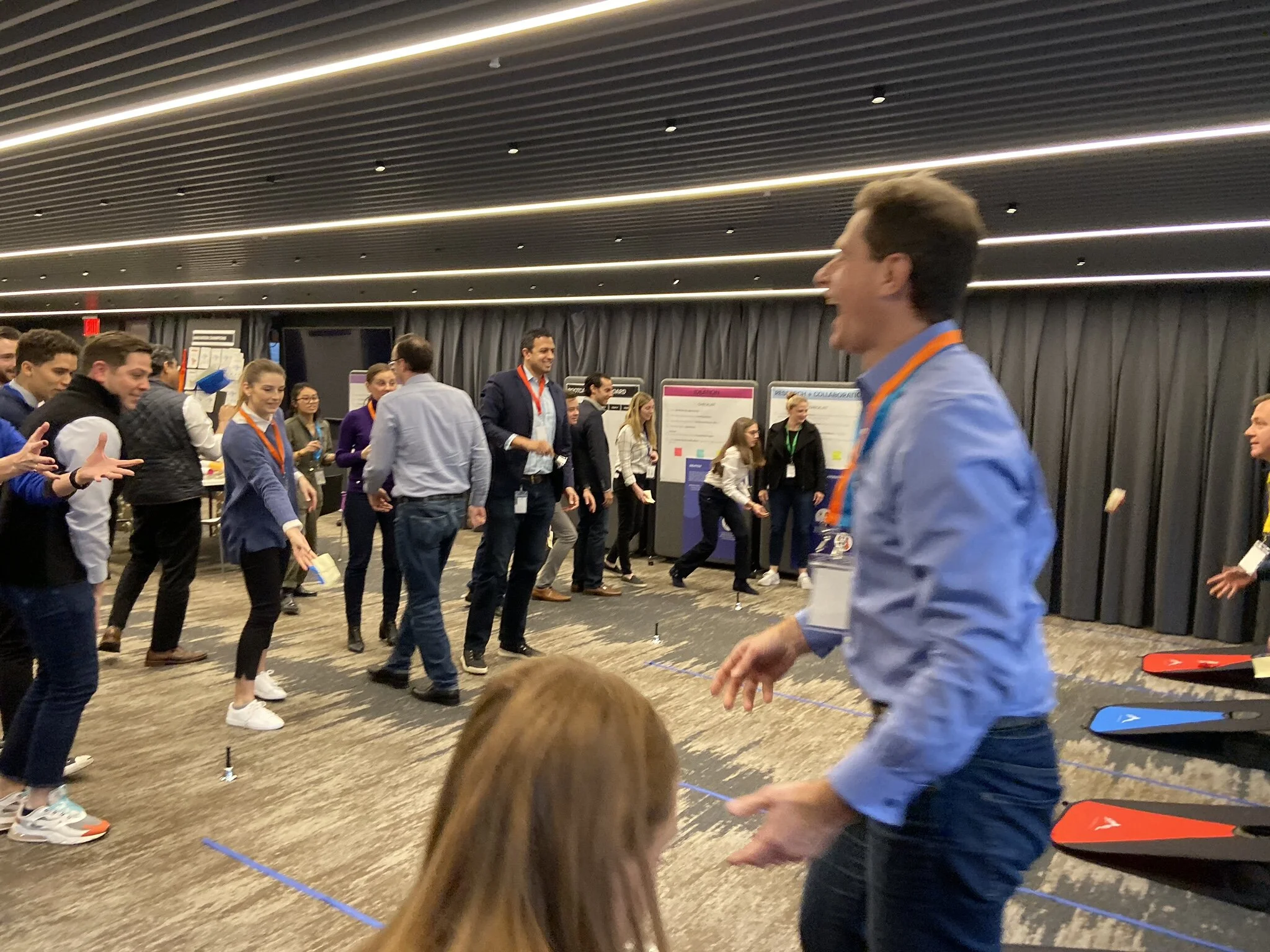
Innovation Champion Bootcamp
Designing experiential learning systems that build innovation capability, shared language, and organizational trust through play and participation
Role: Experience Design & Facilitation Lead
Scope: 30 Innovation Champions · 1-day Bootcamp + Summit
Overview
The Innovation Champion Bootcamp is an experiential learning program designed to help teams practice innovation behaviors, build shared language, and strengthen community across a distributed network of Innovation Champions.
While the organization had developed an Innovation Playbook, people lacked opportunities to actively apply it in their day-to-day work. At the same time, many Innovation Champions had never met in person, making it difficult to build trust and alignment across offices.
In response, I designed an immersive learning experience that translated abstract innovation frameworks into participatory, hands-on experiences that people could practice, internalize, and apply within their own teams.
Impact
The Bootcamp transformed the Innovation Playbook from a static framework into a shared organizational language and repeatable learning model.
Enabled 30 Innovation Champions across global offices
Established a shared language around innovation across teams
Increased engagement, collaboration, and confidence in applying innovation methods
Created a connected network of champions equipped to scale innovation locally
1. Understand Innovation Champions + Playbook
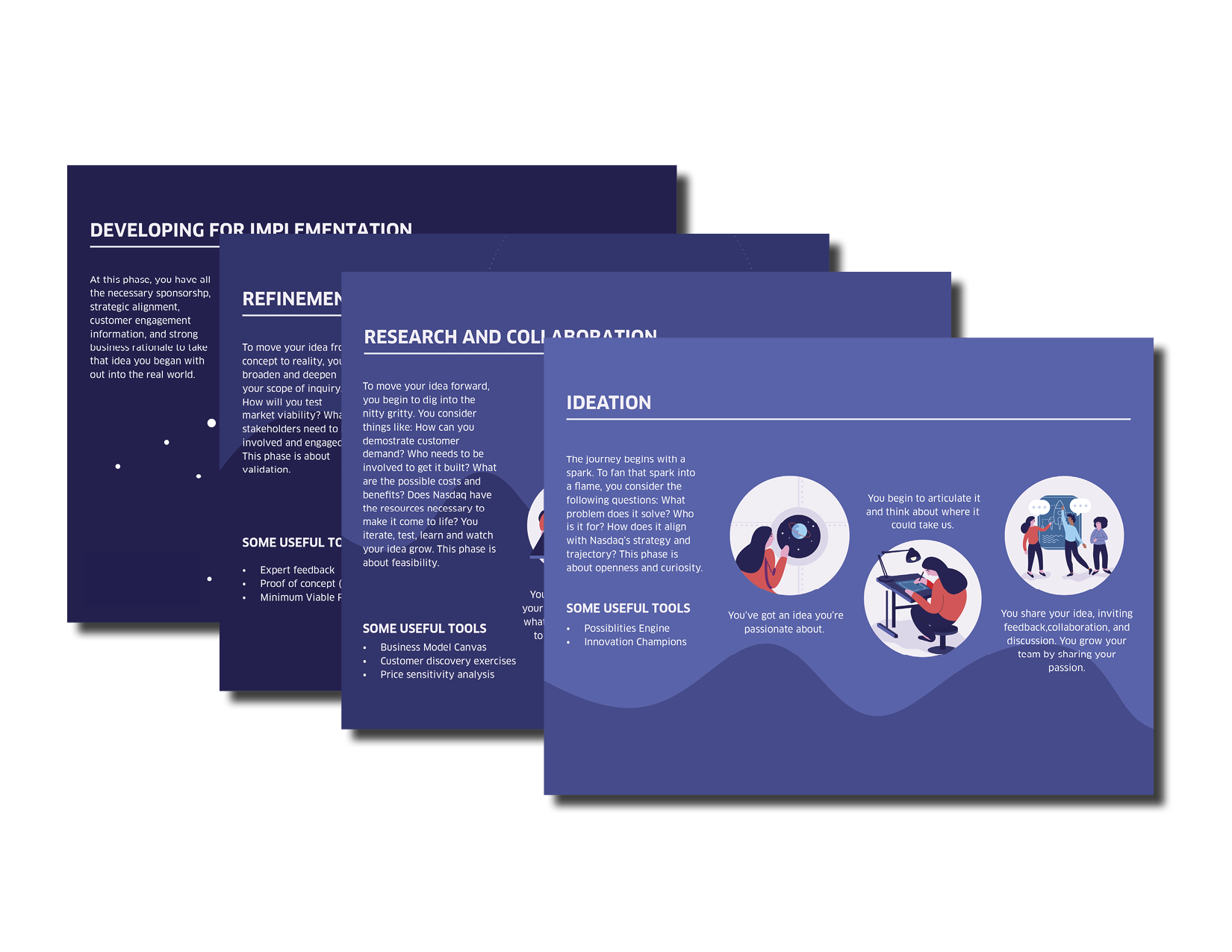
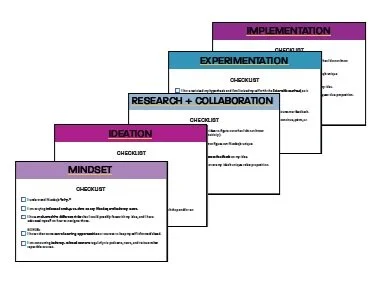
We began by understanding the audience of the Bootcamp, Innovation Champions and their current role and challenges within the company. Next, we studied the Innovation Playbook, Innovation Journey and key concepts per phase in the journey. As part of the company’s first ever Innovation Champion Summit, it was important to enable them to practice and simulate an entire Innovation Journey.
Innovation Champion Role:
30 self-volunteered Innovation Champions across different offices (London, Boston, NYC), responsible for sparking and facilitating innovation capabilities and culture within their offices
Innovation Playbook Journey + Key Concept:
Mindset: I am staying informed and up-to-date on any company and industry news.
Ideation: I have identified my opportunity, dedicated ample time to brainstorming my idea, and developed a hypothesis.
Research + Collaboration: I have conducted external research, utilized the “power of the crowd” to amass feedback on my idea, and developed a pitch to effectively demonstrate my idea’s unique value proposition.
Experimentation: I have revisited my hypothesis and built proofs of concept for my idea.
Implementation: I have a solid plan for how I will be evaluating and updating my concept once I implement it.
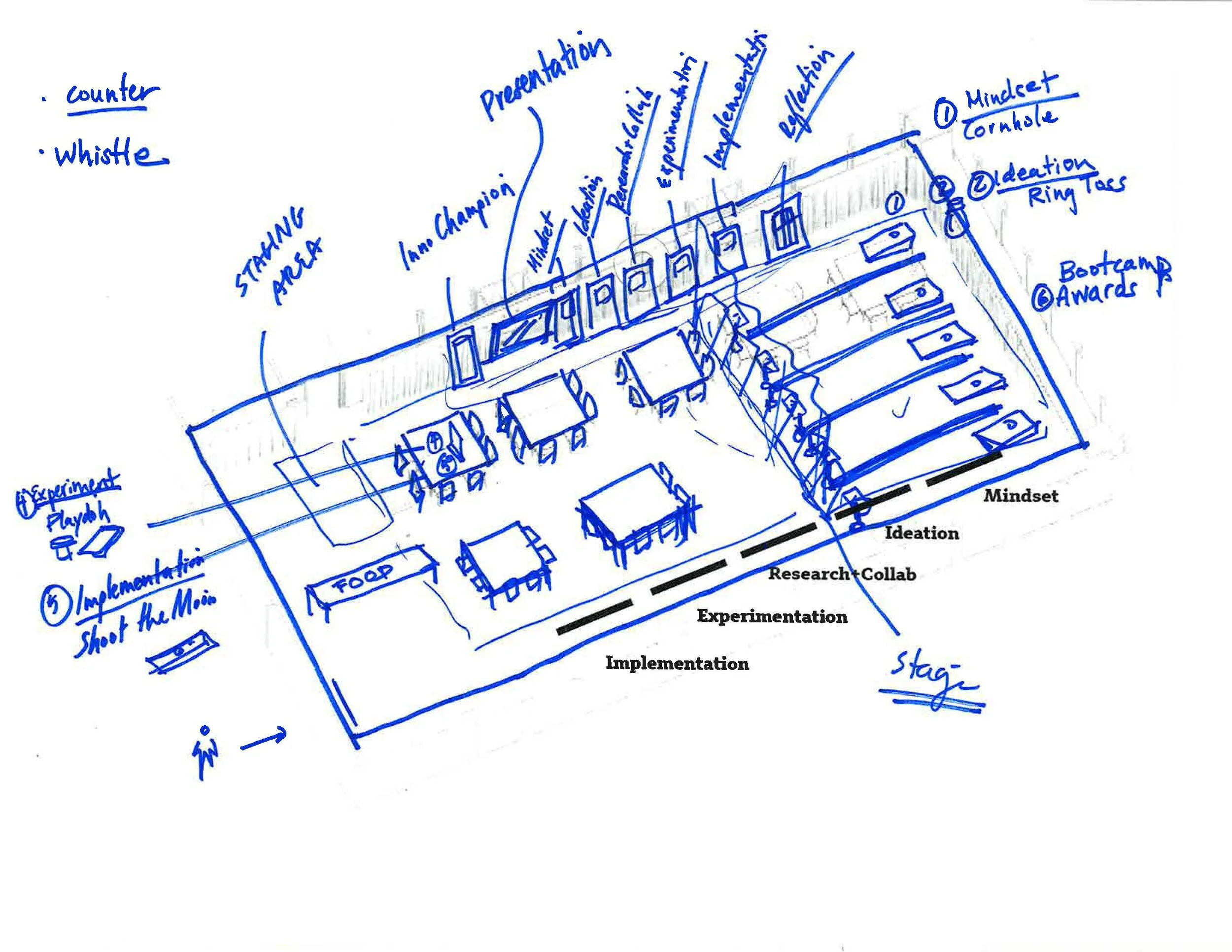
Designing the Experience
The Bootcamp was designed to transform abstract innovation concepts into behaviors people could actively practice, while also creating a repeatable model that could scale across teams.
Rather than teaching the Innovation Playbook through presentations, I translated each phase into a series of hands-on, participatory experiences that encouraged collaboration, experimentation, and real-time application.
Play and simulation were used intentionally to lower barriers to participation, build trust, and make complex ideas feel more intuitive, memorable, and actionable.
Principles
Learn by doing → practice over passive learning
Play as a mechanism → lowers friction and builds engagement
Simulation → mirrors real-world application
Shared experience → builds trust and community
Clear structure → makes abstract concepts actionable
Repeatable formats → enables champions to scale capability
Designing the Learning Journey
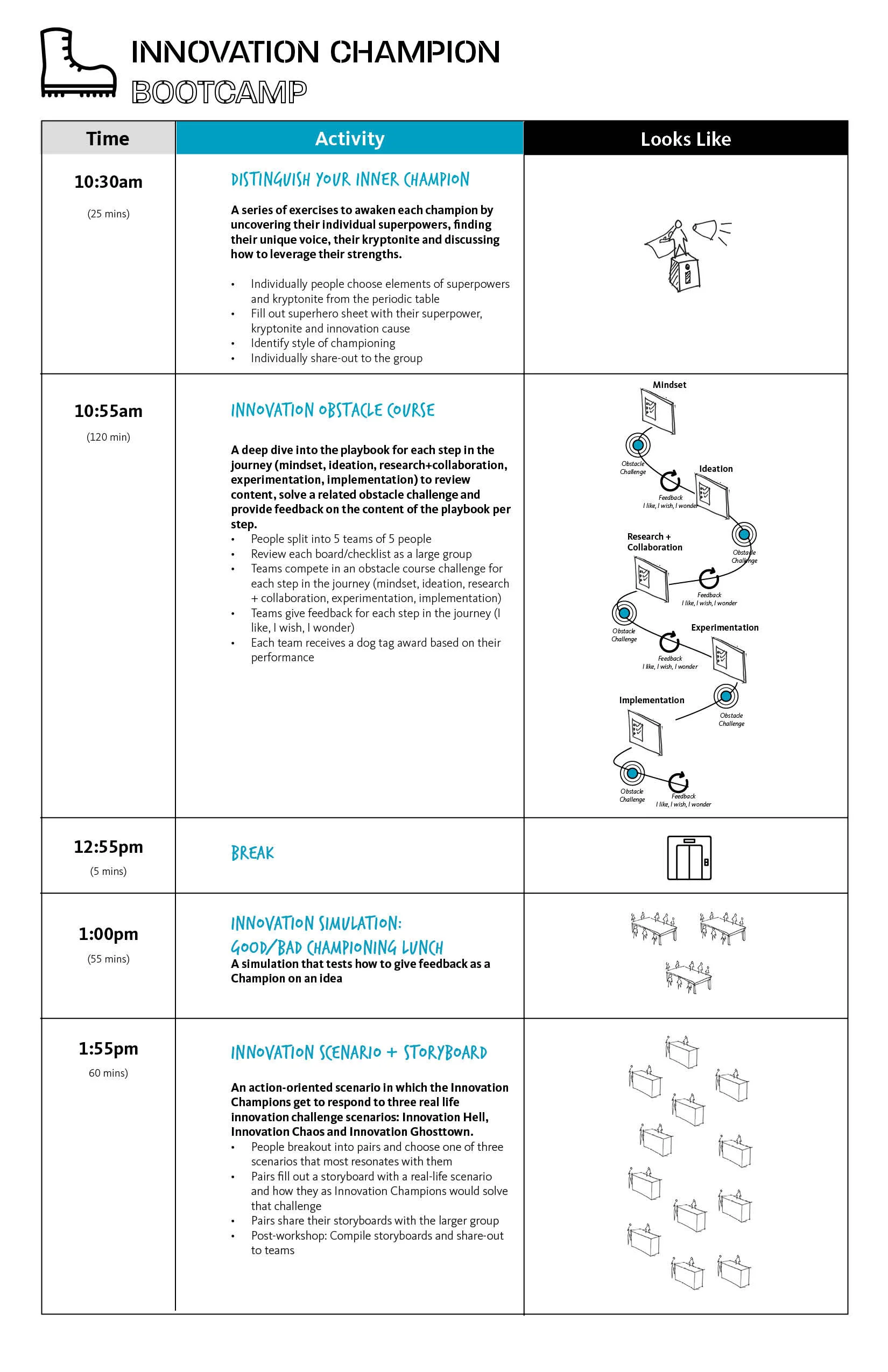
The Bootcamp was designed to help participants actively practice innovation behaviors rather than passively learn frameworks.
By combining play, simulation, and structured collaboration, participants moved through the full Innovation Journey in a way that felt experiential, participatory, and immediately applicable to their work.
Each phase paired abstract innovation concepts with hands-on activities that encouraged experimentation, rapid iteration, feedback, and shared problem-solving. The experience was intentionally designed to lower barriers to participation, build trust, and create a shared language across the Innovation Champion community.
Examples included:
Identifying personal “Champion types” to define roles and strengths
Play-based challenges (Cornhole, Ring Toss, Hot Potato) to simulate learning and iteration
Rapid prototyping using physical materials
Scenario-based exercises to apply concepts to real-world organizational challenges
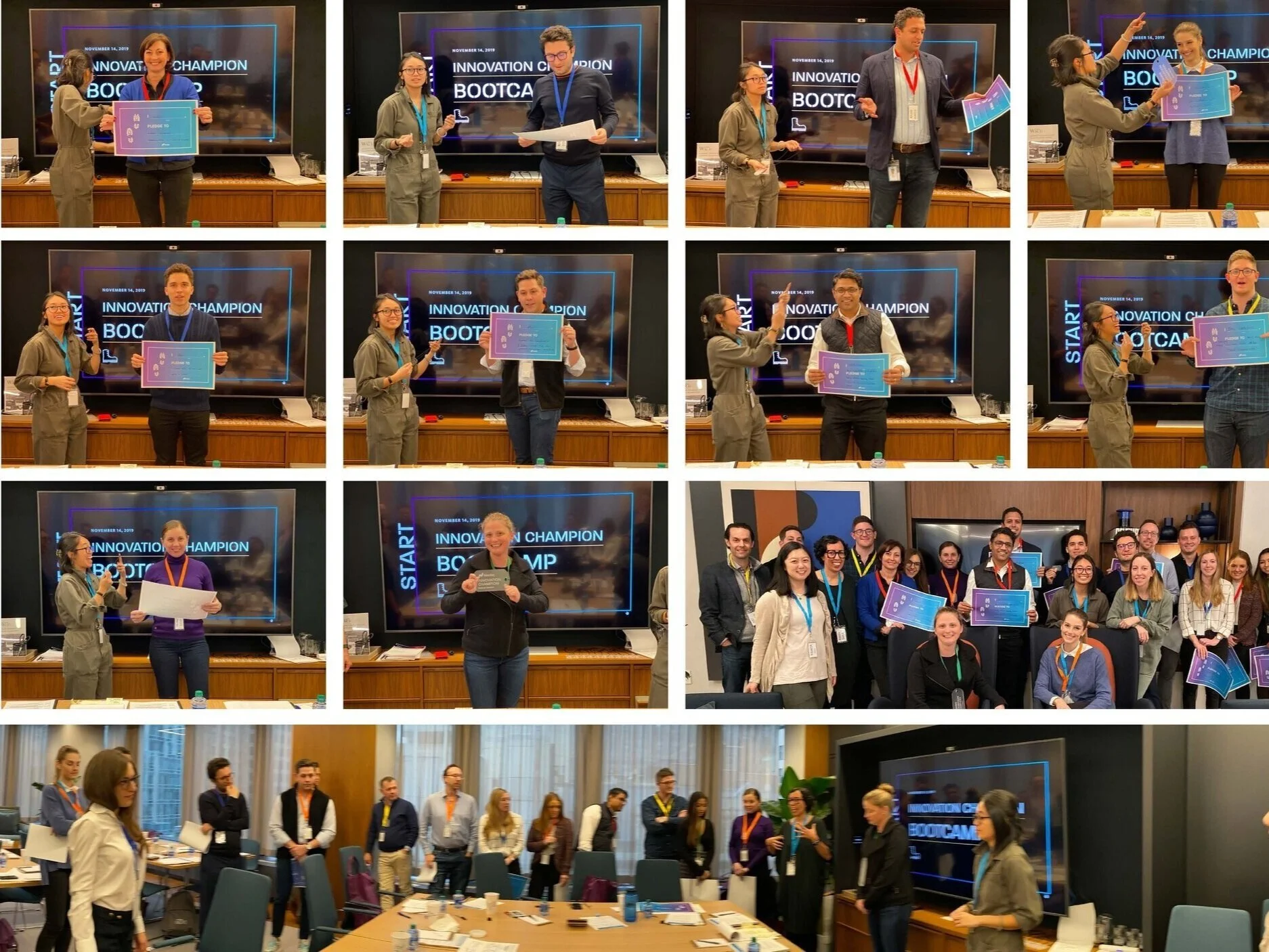
The experience concluded with a commitment moment, where participants pledged how they would apply what they learned moving forward.
This work reinforced that organizational change requires more than teaching frameworks, it requires creating environments where people can practice, internalize, and apply new behaviors together.
1. Distinguish Inner Champion Type
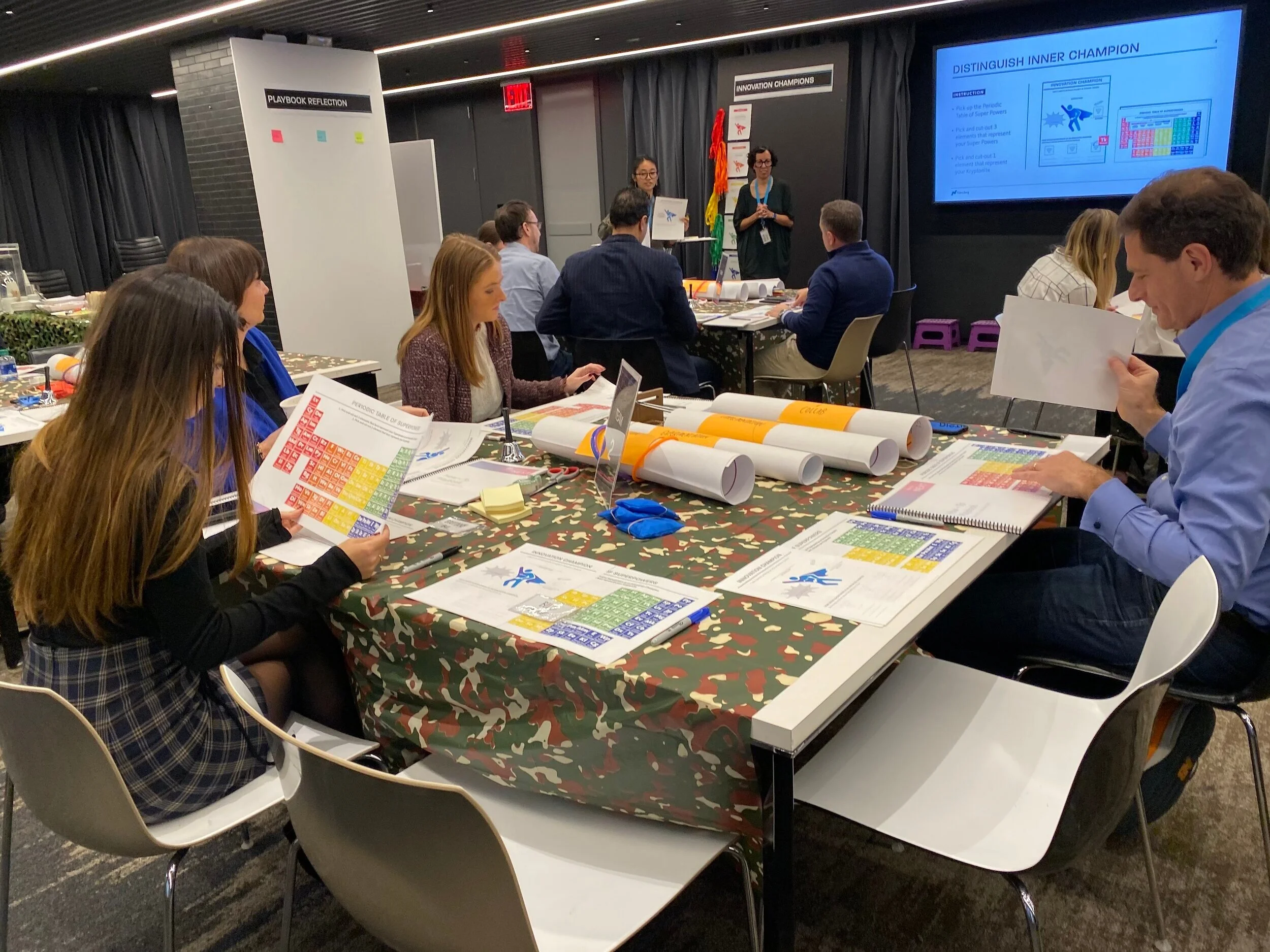
Awaken each champion by uncovering their individual superpowers, finding their unique voice, their kryptonite and discussing how to leverage their strengths. Through a ‘Periodic Table of Superpowers’ exercise, participants choose 2-3 ‘elements’ that best reflected their superpowers. Each element was color-coded and related to a specific Innovation Champion type:
The Inspirer - Spreads Awareness of the Innovation Cause
The Facilitator - Facilitates the innovation journey with people and teams
The Investigator - Poke holes in people’s ideas to help them refine it
The Connector - Connects people in the company ecosystem to other people and collaborators
The Closer - Enables teams to help them make their ideas real

2. Mindset
Learn: Mindset on staying informed and up-to-date on any company and industry news.
Play: Corn Hole
Participants had to find 3 insights/news from the company. Once the news was collected, they were written on post-its that were attached to a cornhole bean bag. Each team competed against each other to be the first team to make all 3 bean bags.
3. Ideation
Learn: Identifying an opportunity, dedicating ample time to brainstorming my idea, and developing a hypothesis.
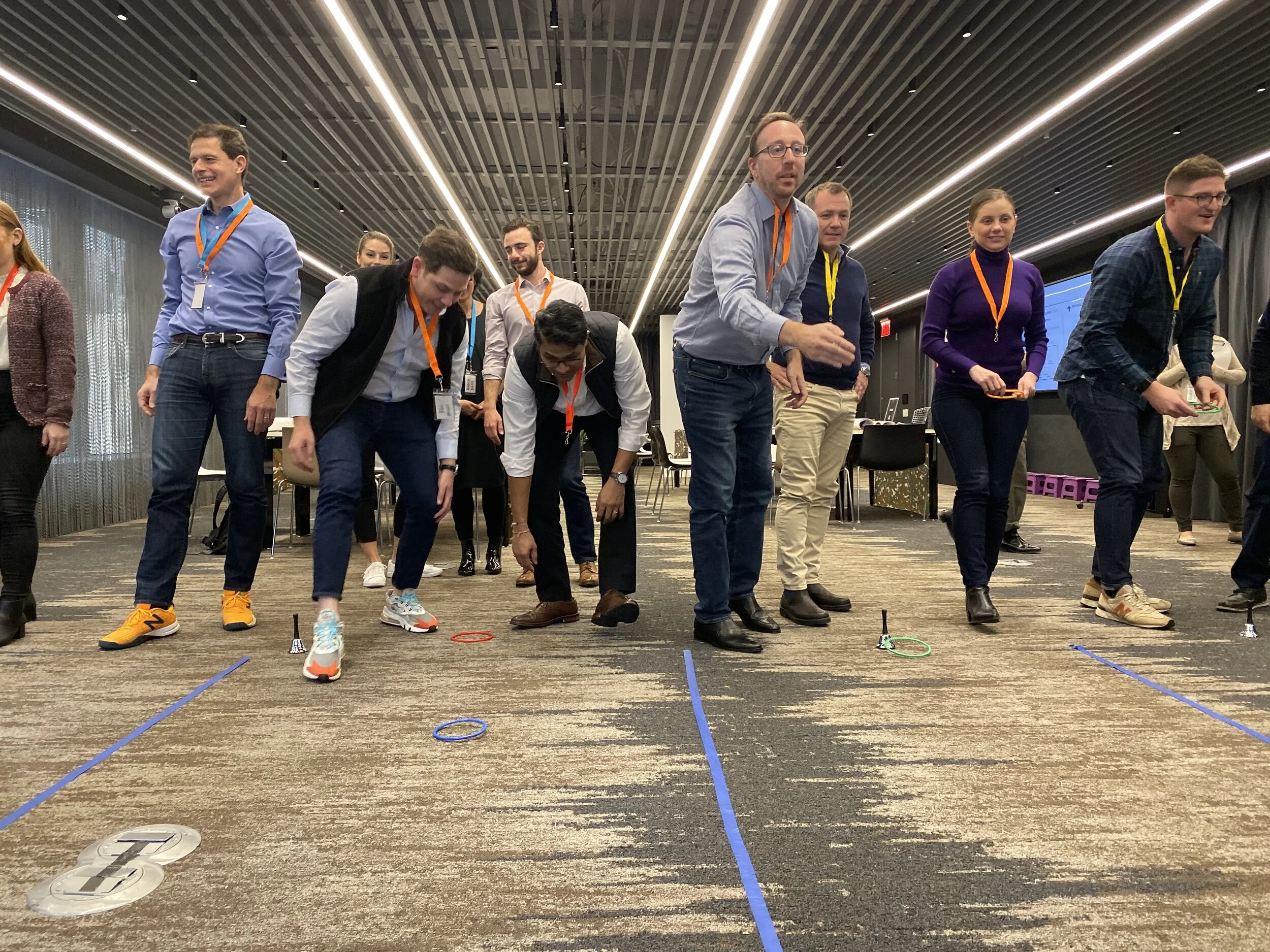
Play: Ring Toss
Participants had to fill out an Ideation storyboard based on a simulation prompt ‘How might we redesign the new bell ceremony experience?’. Once filled out, teams had to fill out an initial hypothesis sheet. Once completed, the hypothesis sheet was placed within a glass lightbulb to be the center of a game of Ring Toss.
4. Research and Collaboration
Learn: Conducting external research, utilize the “power of the crowd” to amass feedback on my idea, and develop a pitch to effectively demonstrate my idea’s unique value proposition.
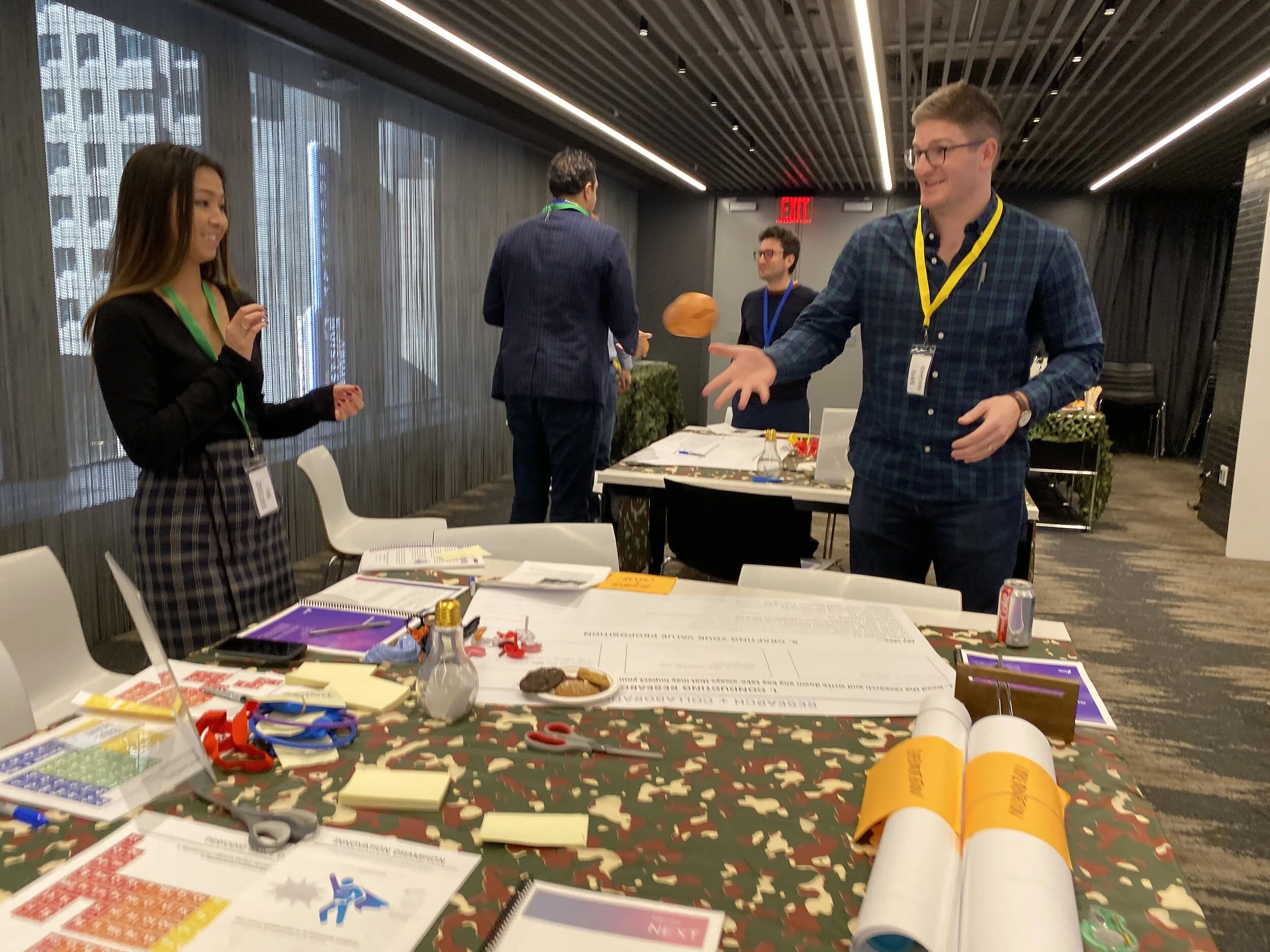
Play: Hot Potato
Participants had to quick read 3 external articles and create an iteration on their idea. Each team rotated tables except for one person who stayed behind to pitch their idea to the visiting group. Through a game of Hot Potato, whoever caught the Mr. Potato would have to offer a piece of feedback on the idea and afterwards plug in a Mr. Potato feature. The goal was to have the most complete Mr. Potato, encouraging teams to utilize the power of the crowd.
5. Experimentation
Learn: Build proofs of concept for my idea.
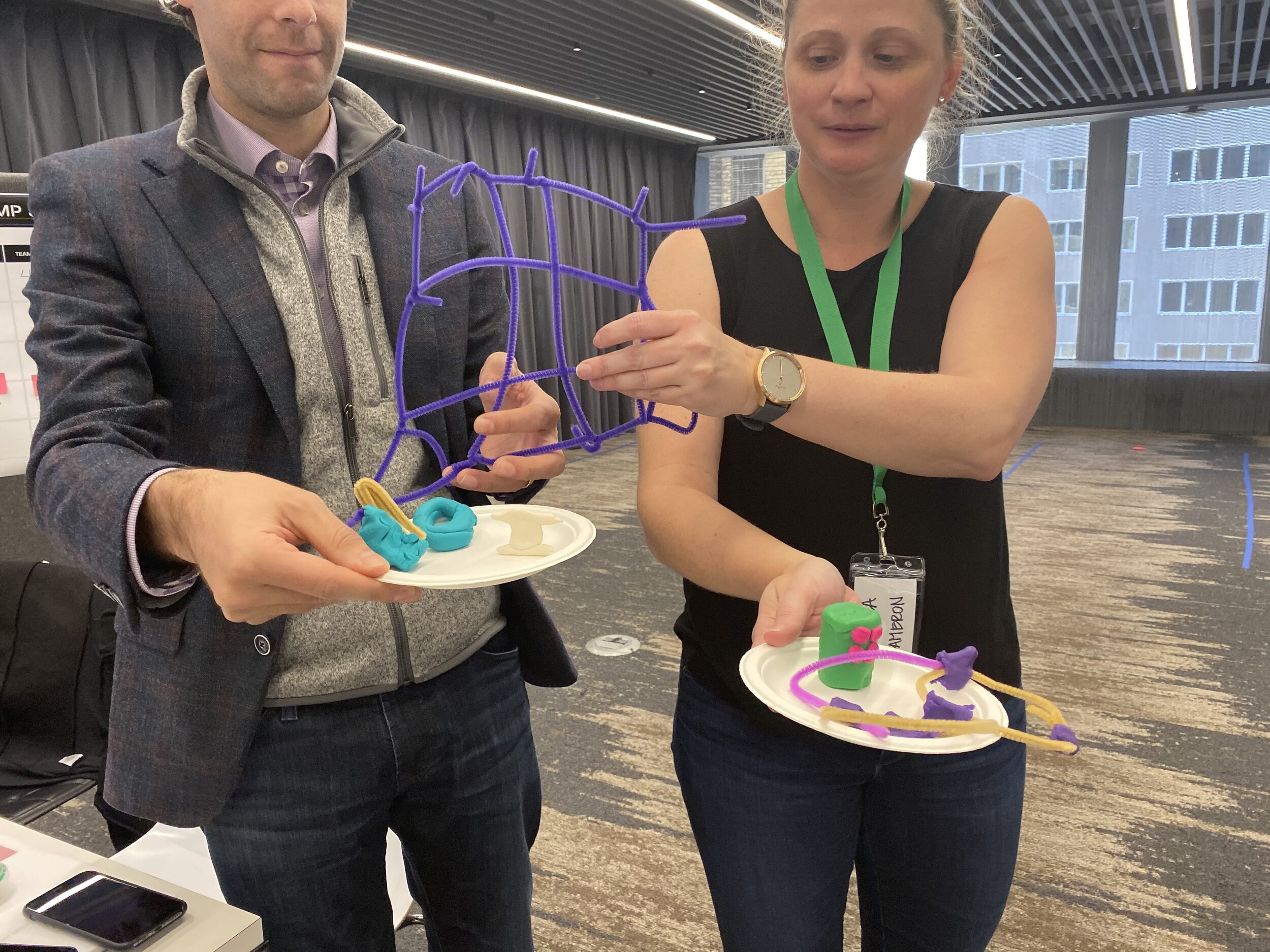
Play: Playdoh + Pipecleaner Prototypes
Participants build out their concept with the intention of communicating their idea to others and iterating through building.
6. Implementation
Learn: Develop a plan on how to evaluating and updating my concept once I implement it.
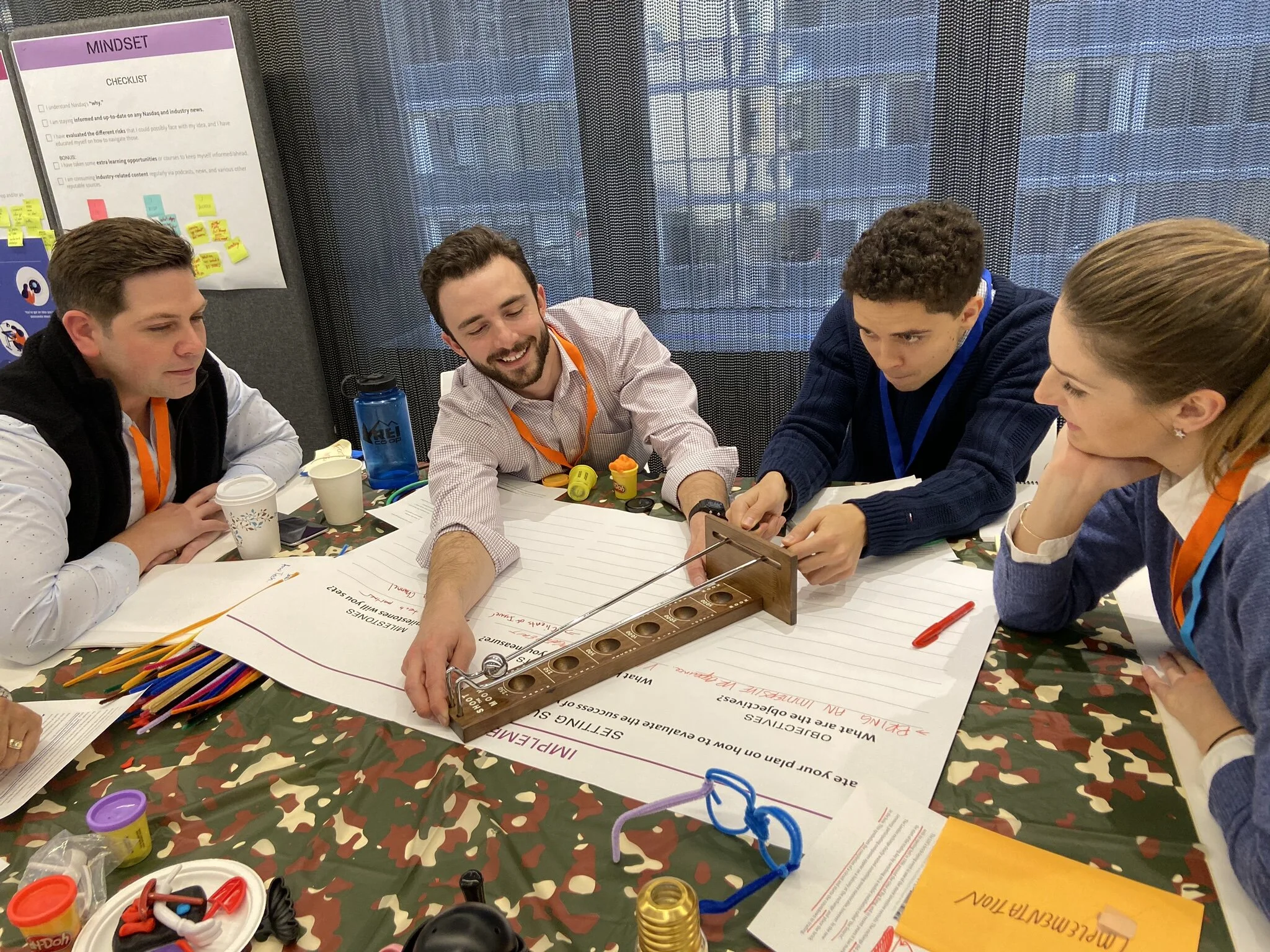
Play: Shoot the Moon Game
Participants filled out a canvas on Setting Measures of Success and then competed in games of Shoot the Moon under a time limit. Teams had to establish which level (300,500,1000,5000) they wanted to aim and end by the time timer’s up.
7. Bootcamp Awards
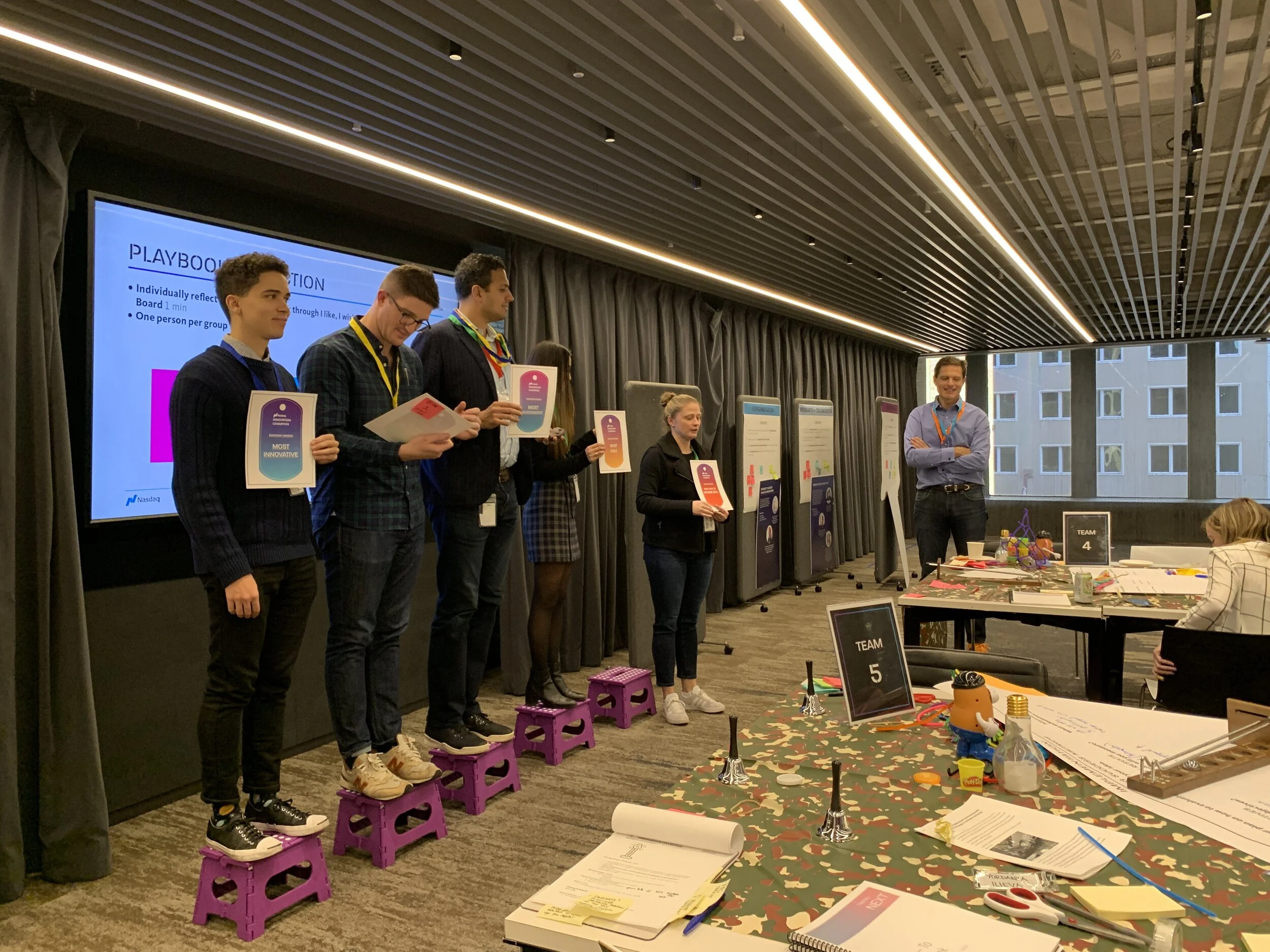
Tallying the team scores based on their performance in each game, Awards were distributed to each team.
8. Scenario + Storyboard
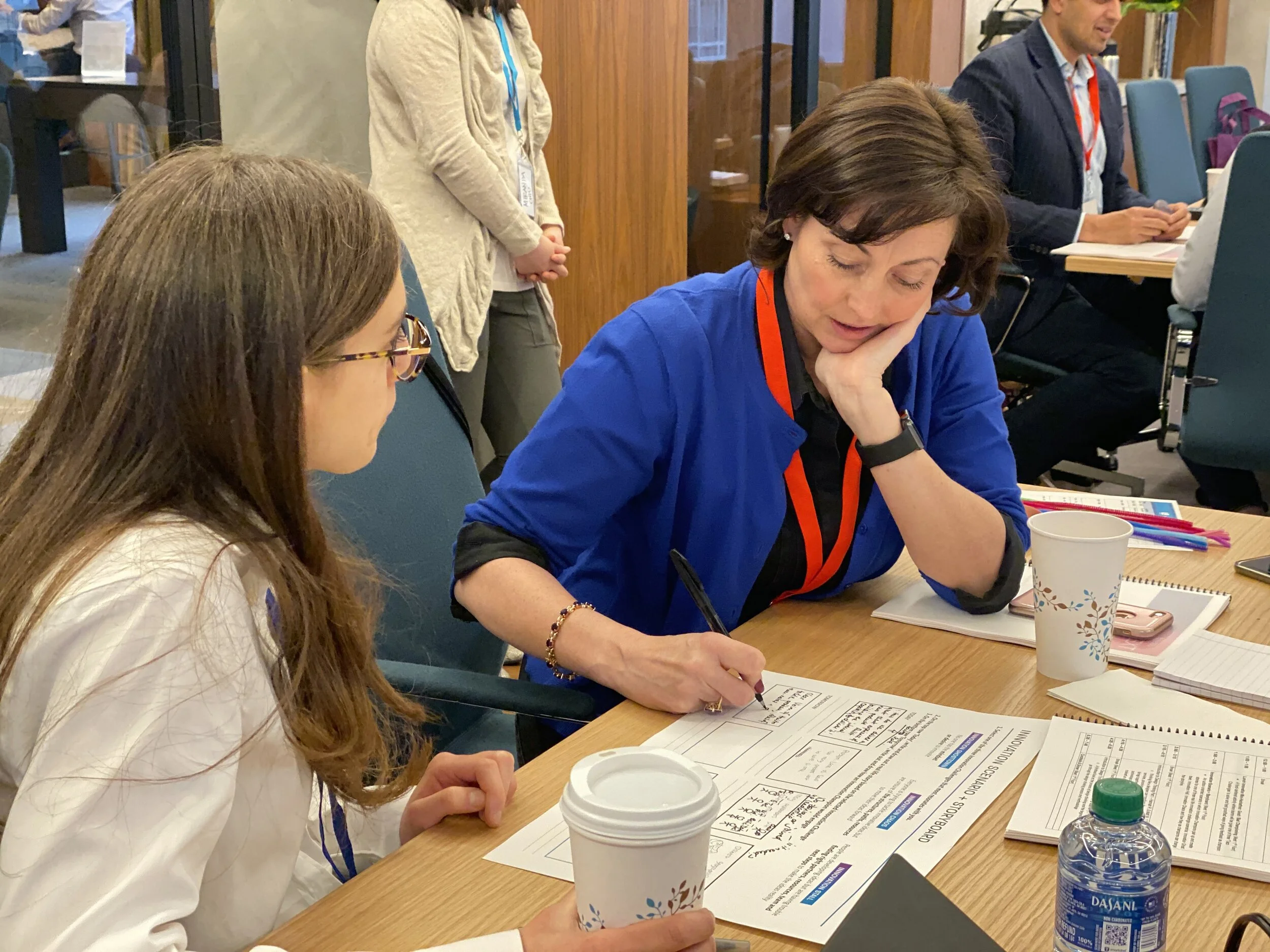
An action-oriented scenario in which the Innovation Champions get to respond to three real life innovation challenge scenarios: Innovation Hell, Innovation Chaos and Innovation Ghosttown.
9. Graduation
Have Innovation Champions ‘graduate’ by committing to a pledge on how they will practice what they learned in the Bootcamp.
“I pledge to build my network to help break
down walls”
“I loved the Scenario + Storyboards Activity and the innovation challenge scenarios introduced, it helped give a shared language to our Innovation Champion community and personally identify specific areas I can focus on in my day to day”
“The use of play and games as a metaphor was critical in introducing key concepts was really powerful in bringing these concepts to life”