Activating Places
Through Play
Designed a series of playful, site-specific interventions to transform underutilized campus spaces into places of connection and interaction.
Role: Experience Design Lead
Scope: Cornell Campus · 5 activations · 300+ participants
Overview
This project explored how playful, site-based interventions can transform overlooked spaces into places of connection.
Through interviews and workshops, I found that while campus spaces were highly trafficked, they were often underutilized for interaction. Students moved through them, but rarely engaged with each other or the environment.
In response, I designed a series of temporary, low-cost activations that invited people to participate, interact, and reimagine how shared spaces could be used.
Impact
The project demonstrated how small, intentional interventions can shift how people experience space.
300+ participants per activation
Increased interaction in previously overlooked spaces
Sparked cross-disciplinary connection
Influenced future programming and spatial redesign
Contributed to long-term transformation of campus spaces
Designing the Experience
The goal was to create playful, low-pressure experiences that invite participation in everyday environments while also being simple enough to repeat across different spaces.
Rather than designing one-off installations, I focused on creating a flexible approach that could adapt to different locations while maintaining a consistent experience. Each activation was grounded in familiar interactions, using play as a way to lower barriers and encourage engagement.
I identified high-traffic but underutilized spaces and designed lightweight, temporary interventions that could transform how people interact with them. Each experience introduced clear roles, simple rules, and recognizable formats, making it easy for people to join without instruction.
This approach allowed the activations to be both site-specific and repeatable, demonstrating how small, intentional interventions can scale across environments.
Principles
Designed for play → familiar interactions people already understand
Low barrier to entry → easy to join without instruction
Leverage existing flow → embedded in high-traffic spaces
Simple rules and roles → guide participation
Flexible formats → adaptable across different environments
Activation Examples
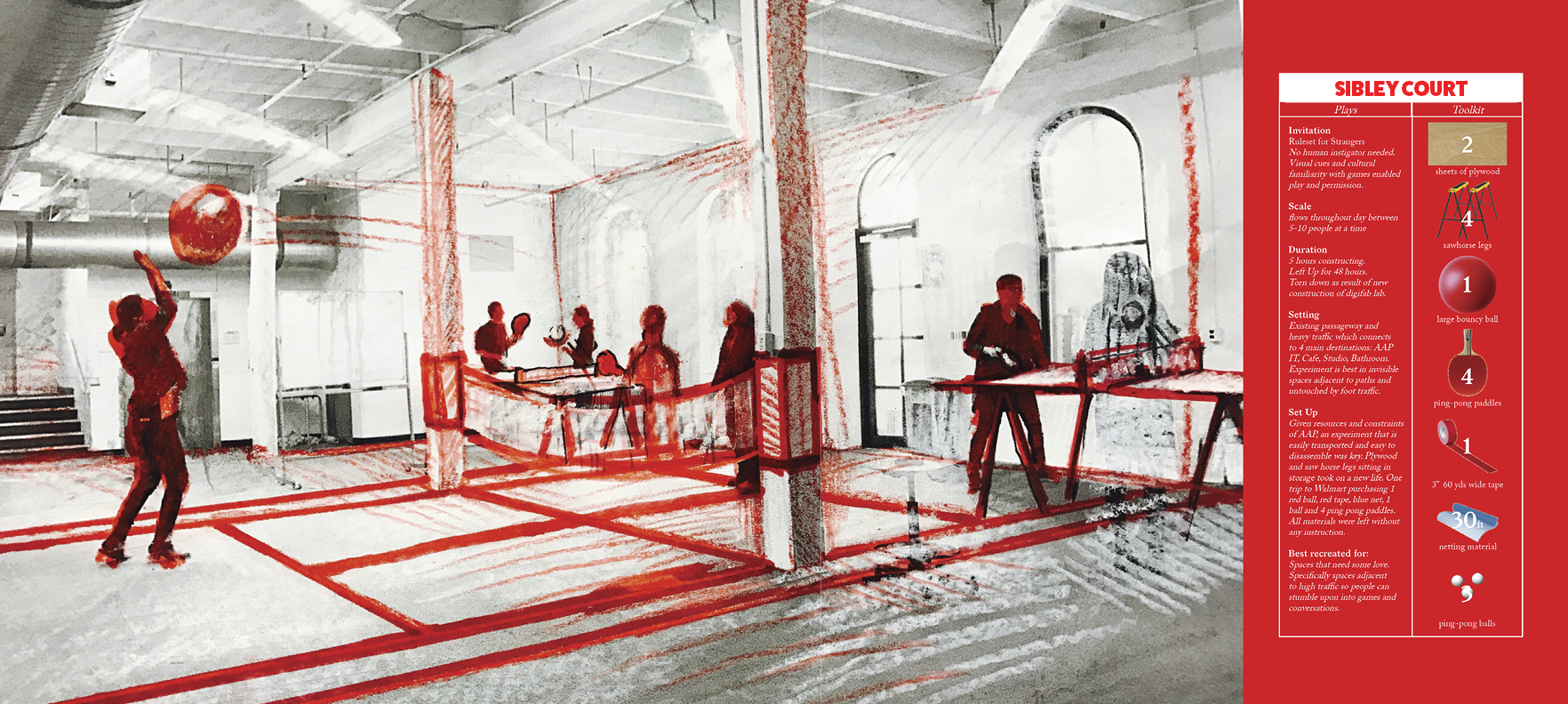
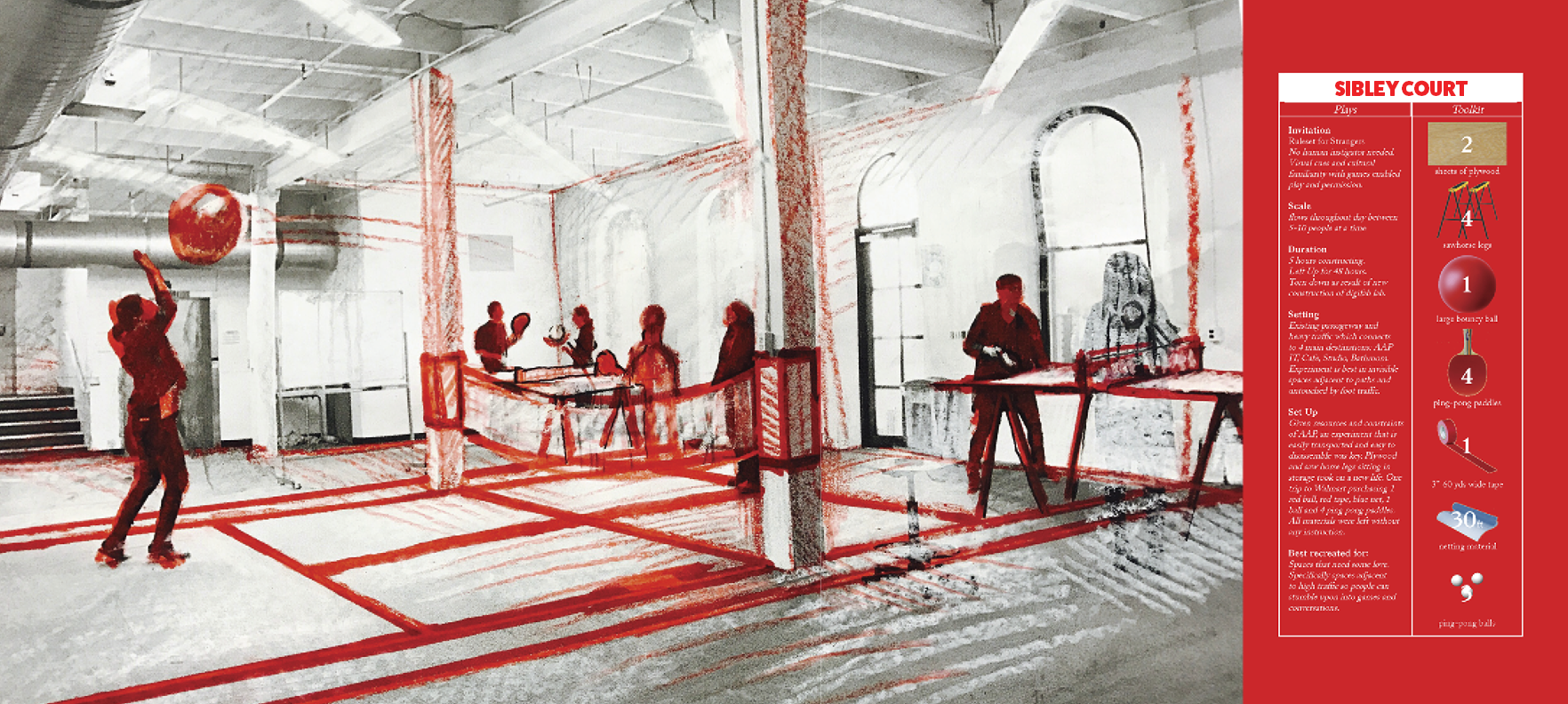
Sibley Court
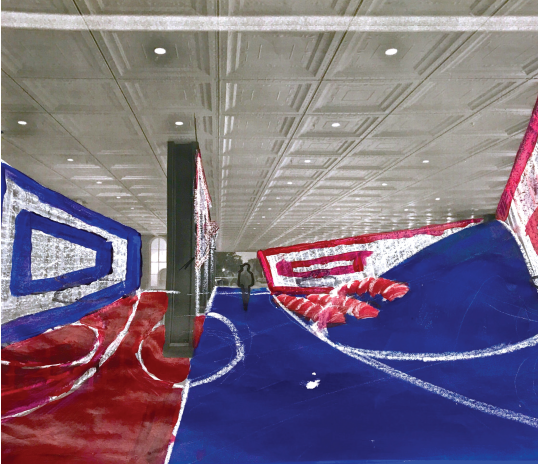
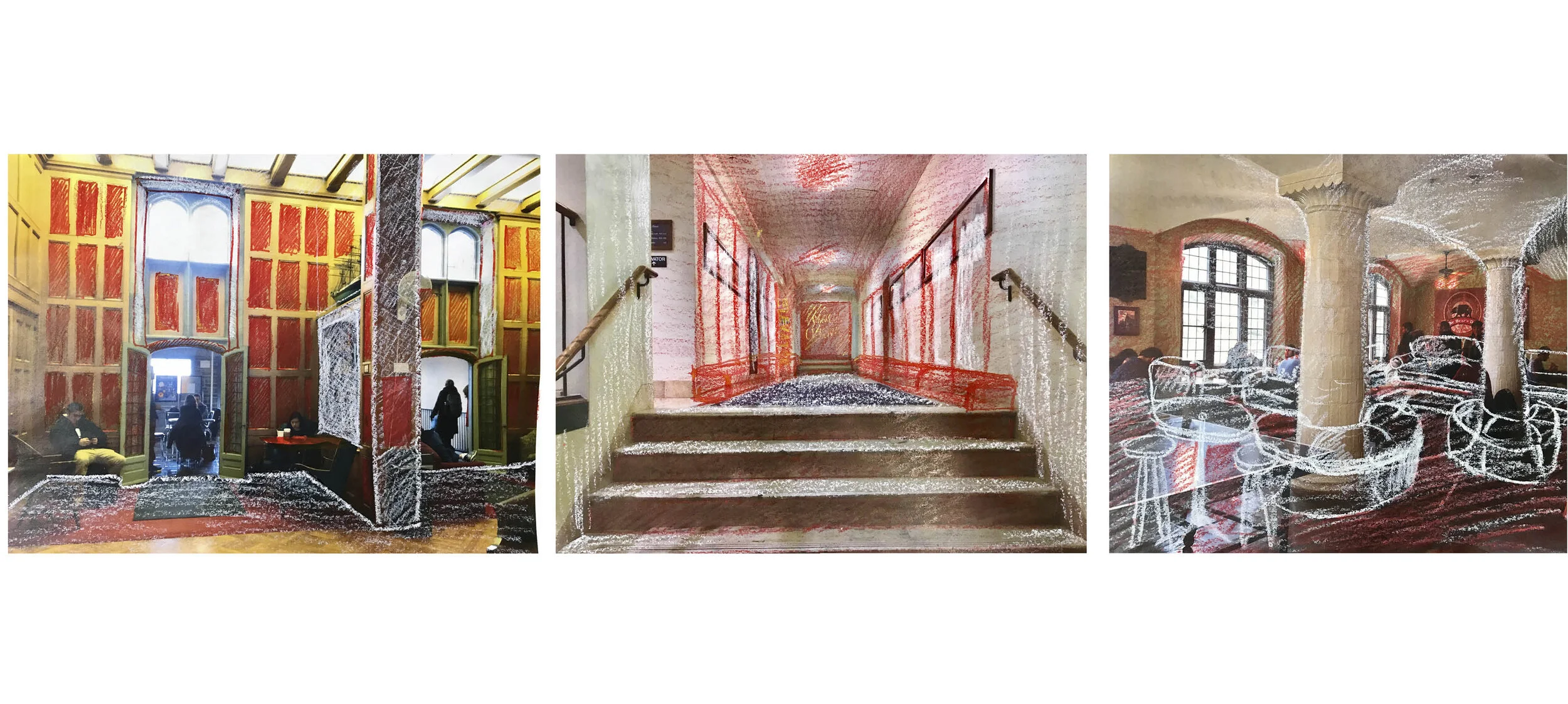
Transformed a hallway into a large-scale ping-pong experience using simple materials.
→ 300+ participants engaged organically over a week.
Rand Ballpit
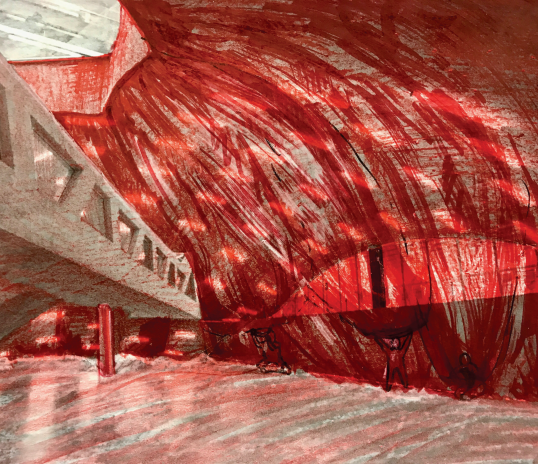
Converted unused space under a staircase into a balloon-filled play zone.
→ Demonstrated how small interventions can attract attention and interaction.
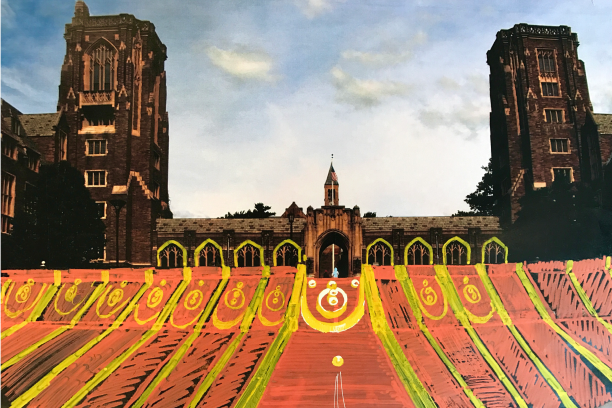
Blowing Up the Dome
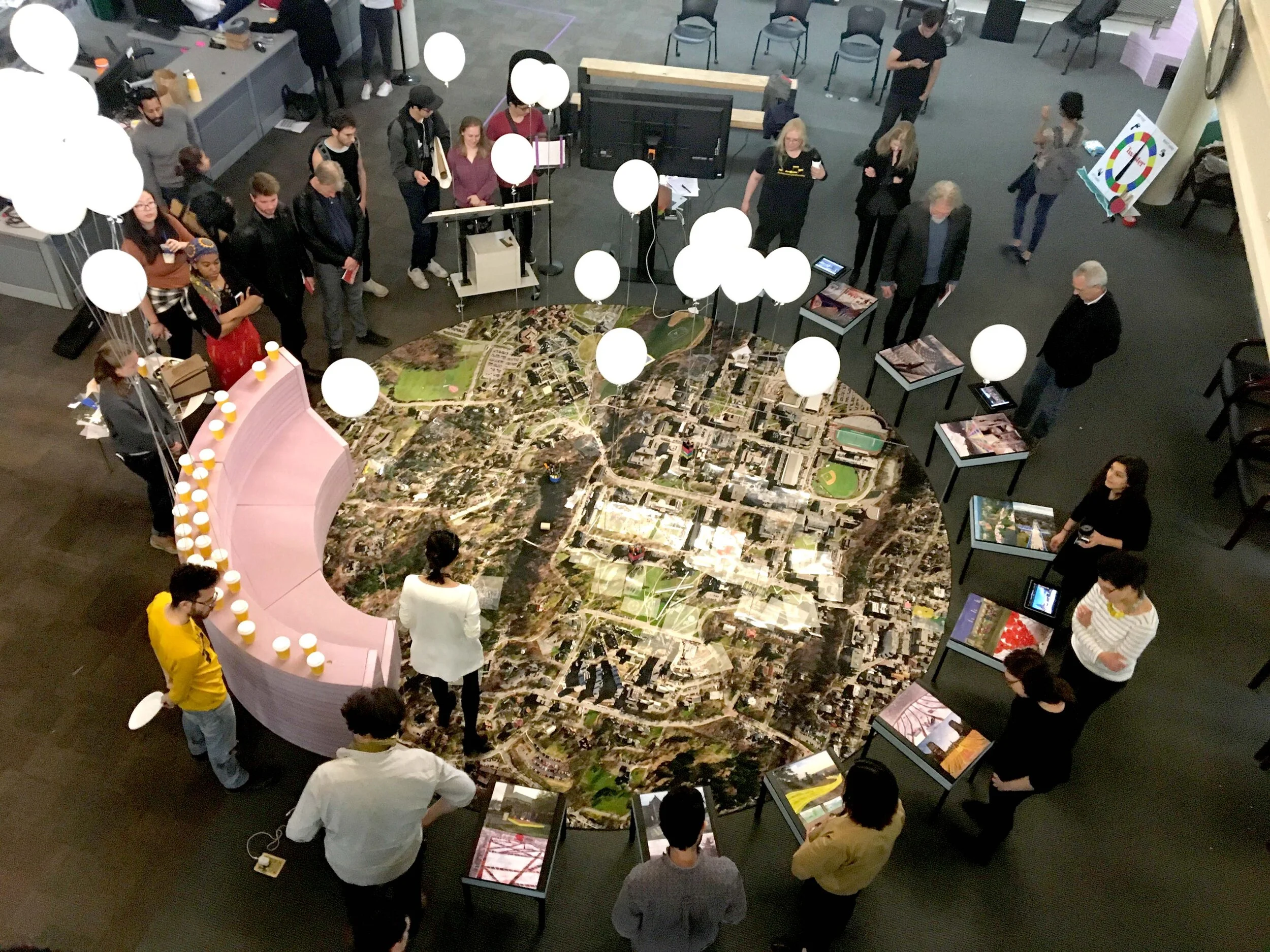
Connected siloed departments through a collaborative balloon installation.
→ 300 participants engaged in cross-disciplinary interaction.
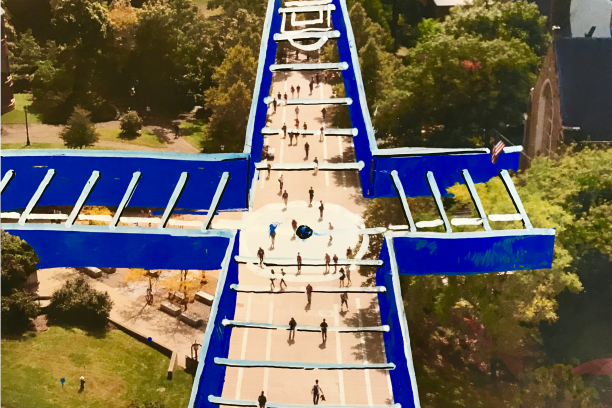
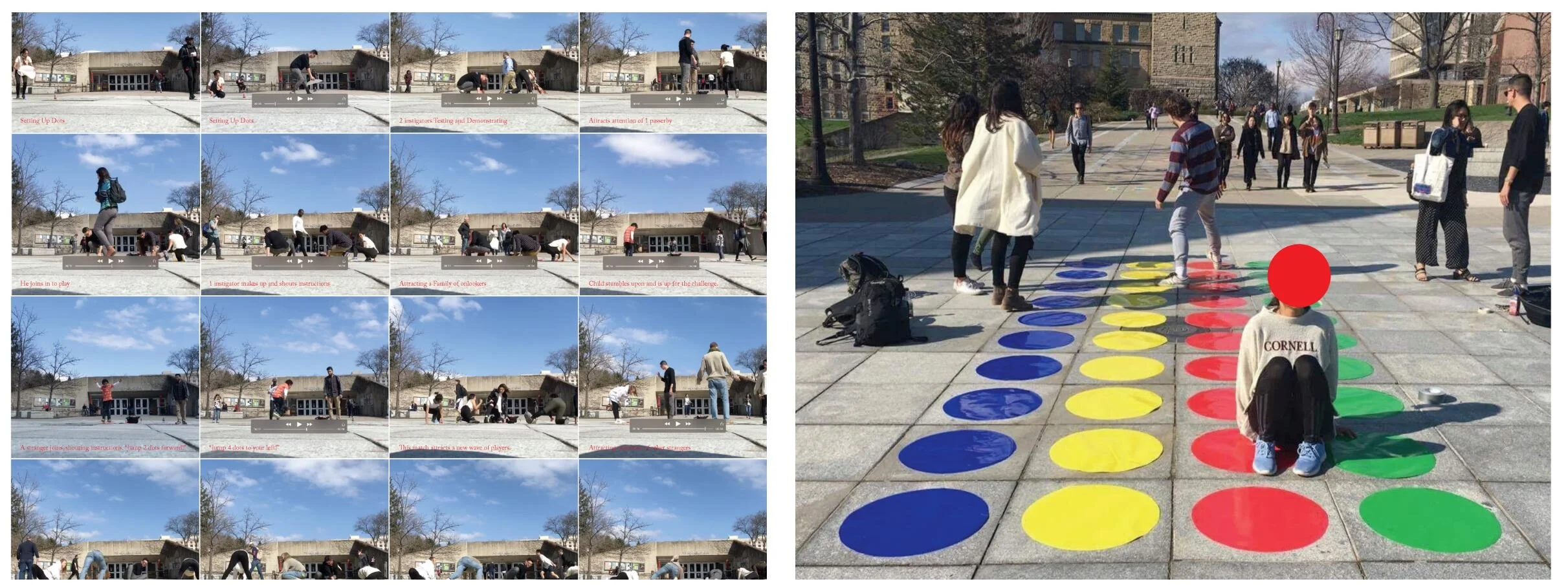
Plaza Twister
Turned a central plaza into a large-scale game using the existing ground grid.
→ Created spontaneous participation among passersby.
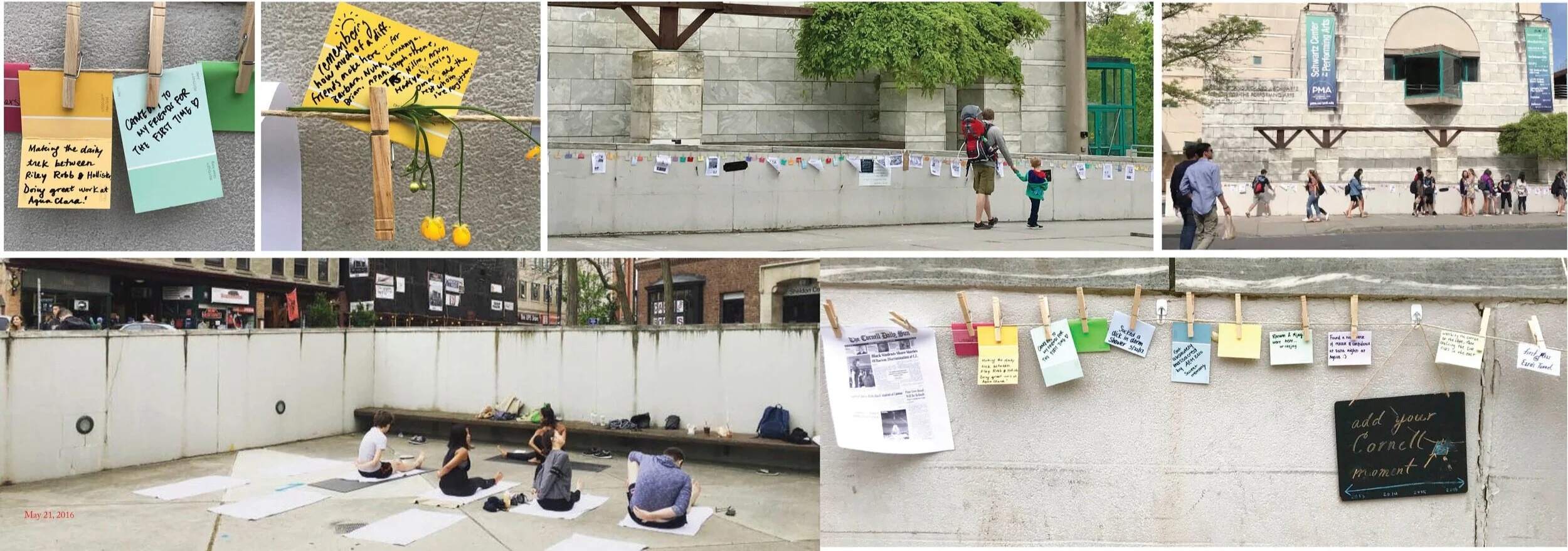
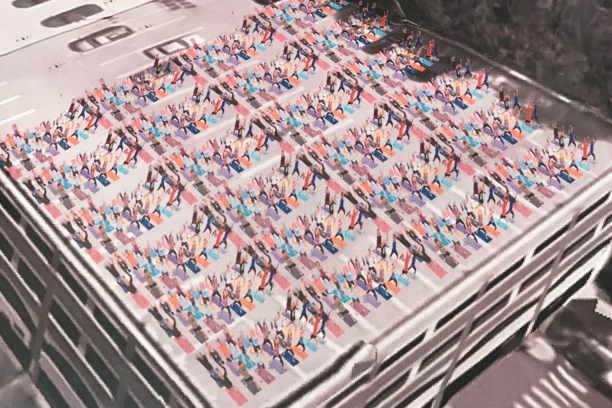
Yoga + Moments Wall
Activated an overlooked plaza through a scheduled class + reflection wall.
→ Combined structured and unstructured participation.
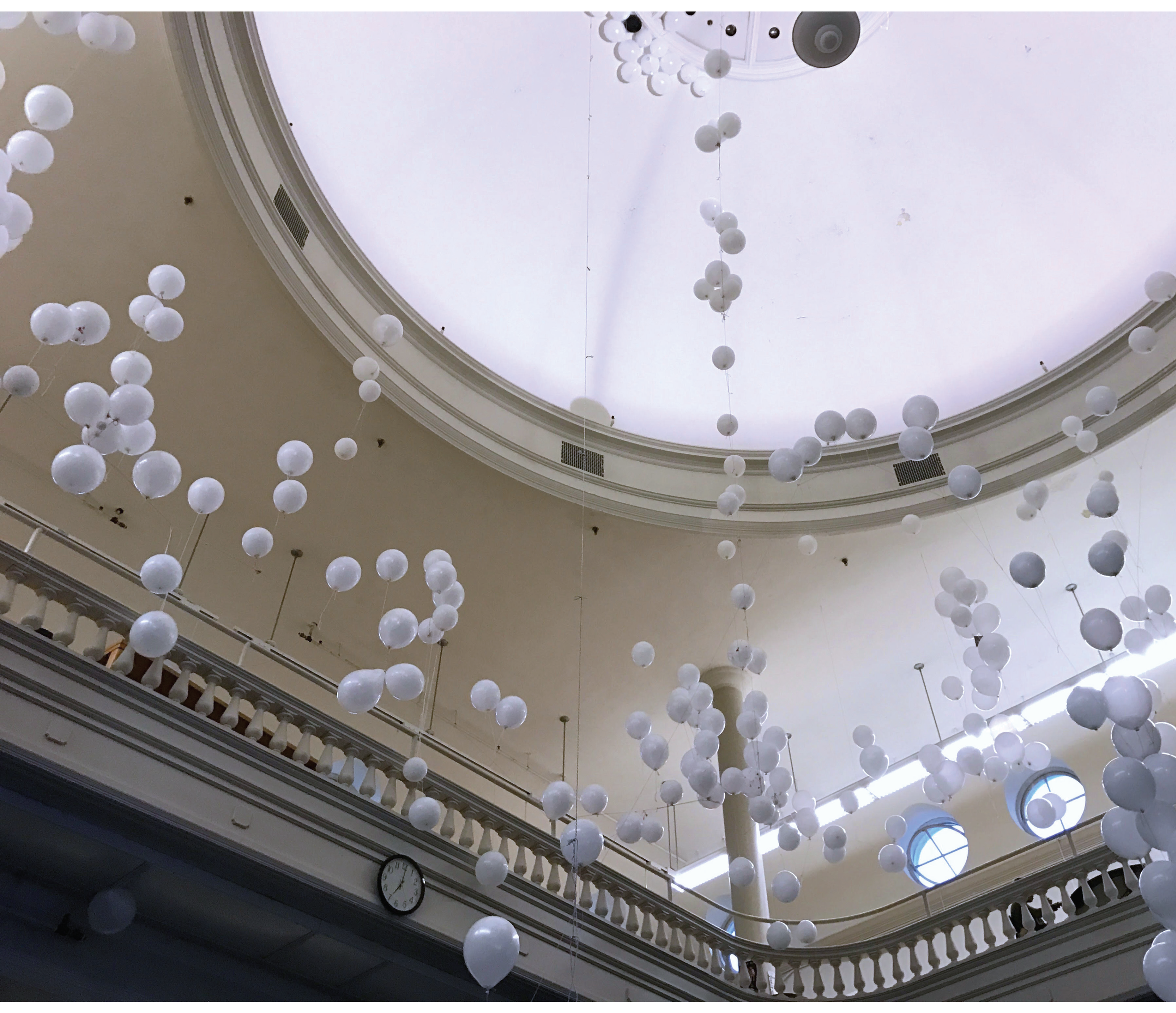
Blowing Up the Dome
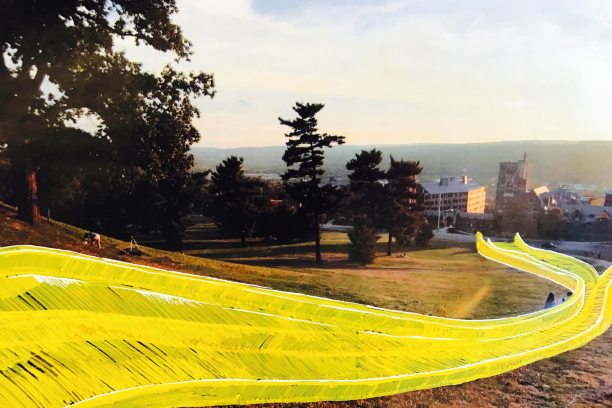
Scaling the Model
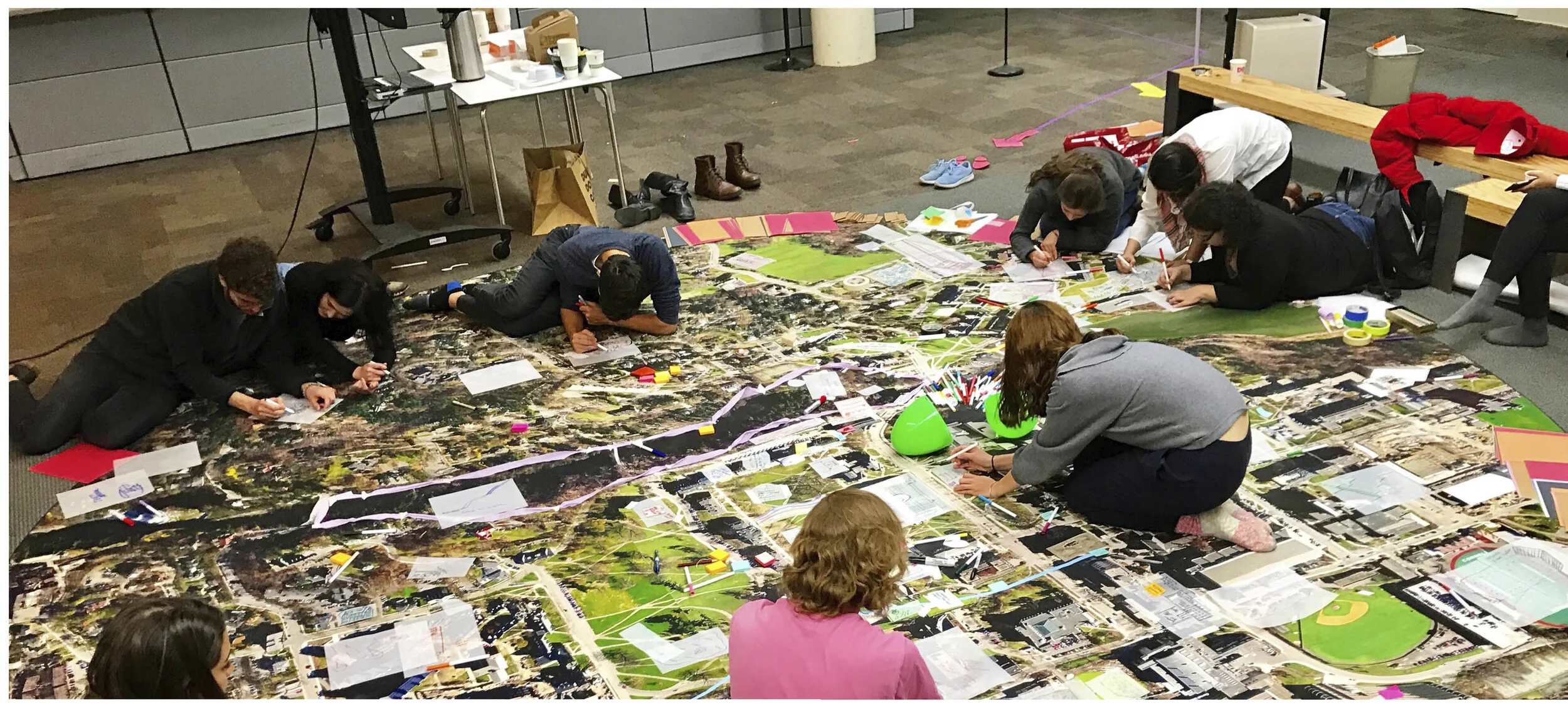
After the initial activations, I translated each intervention into a playbook that documented purpose, materials, and setup, making them easy to recreate and adapt across different locations.
I also observed that the activations themselves began to shift how people perceived and used these spaces, inspiring new behaviors and additional activities in previously overlooked areas.
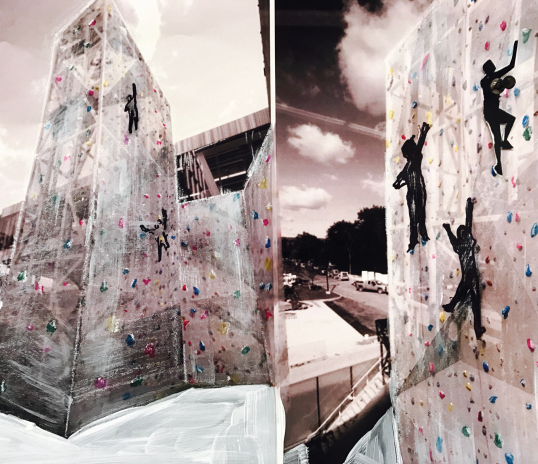
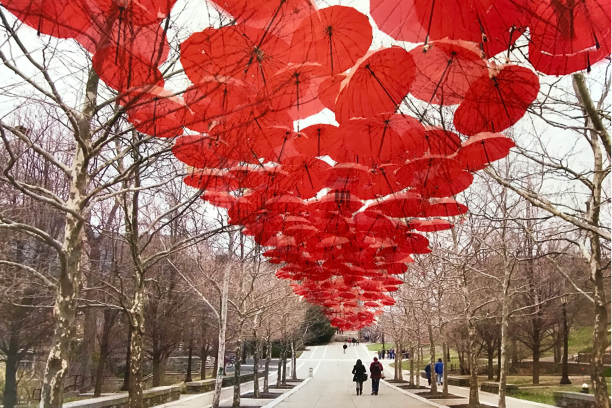
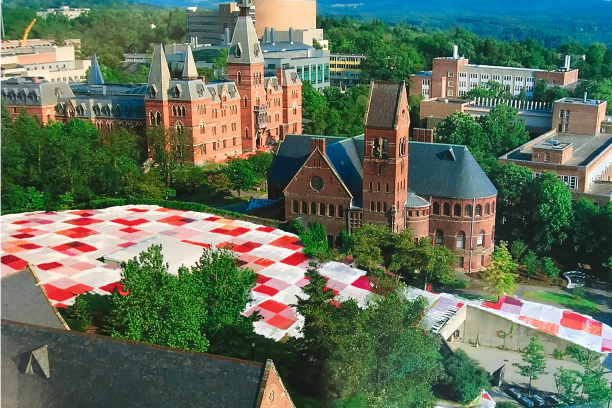
Through sketches and speculative concepts, I extended these ideas to imagine how play-based interventions could scale across campus, shaping a broader vision for how shared environments could foster connection.
Designing for Play in Public Space
Play is one of the most effective ways to invite participation in shared environments.
When experiences are:
familiar
low-pressure
and embedded into existing movement
people are more likely to engage.
This project reinforced that small, playful interventions can reshape how people interact with each other and with space, turning passive environments into active, social ones.
Activation Details
Sibley Court
Rand Ballpit
Blowing up the Dome
Plaza Twister
Yoga + Moments Wall
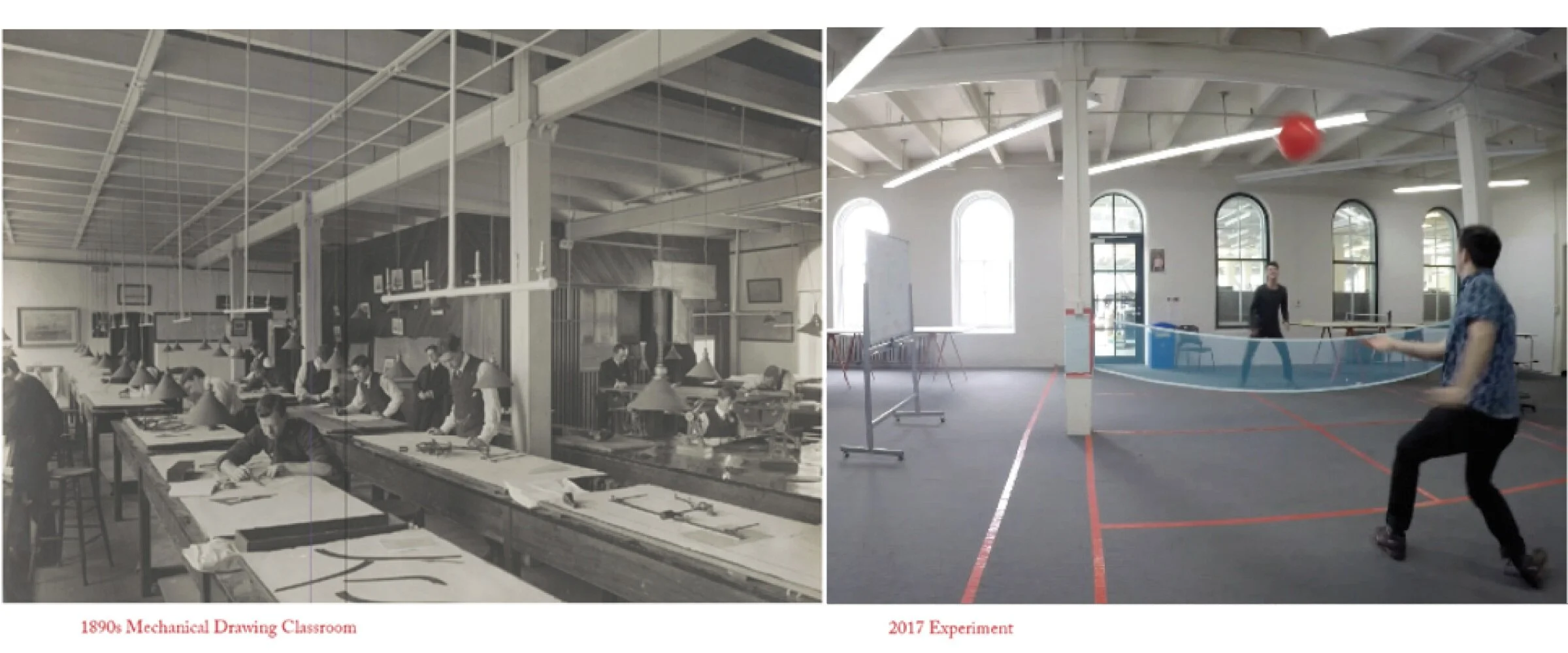
1. Sibley Court
Location: Identified a hallway location that was empty, but located near the elevators, bathrooms and studios and always drew a lot of foot traffic.
Activation: A ballcourt and ping-pong tables that leverages the existing columns to use as a frame.
Materials: 4 saw horses, 2 plywood sheets, 1 large bouncy ball, 1 roll of red tape, 3 meters of netting, and 3 ping pong balls.
Outcomes: 300 people participated over a week long period without prompting by playing ping-pong and a large-scale version of ping pong without hands as racquets.
Learnings: Identify locations with existing heavy traffic that are thoroughfares between popular destinations. Design a way to invite people through signage and games people are already familiar with. Create surprise by designing at various scales, and a temporary duration.
2. Rand Ballpit
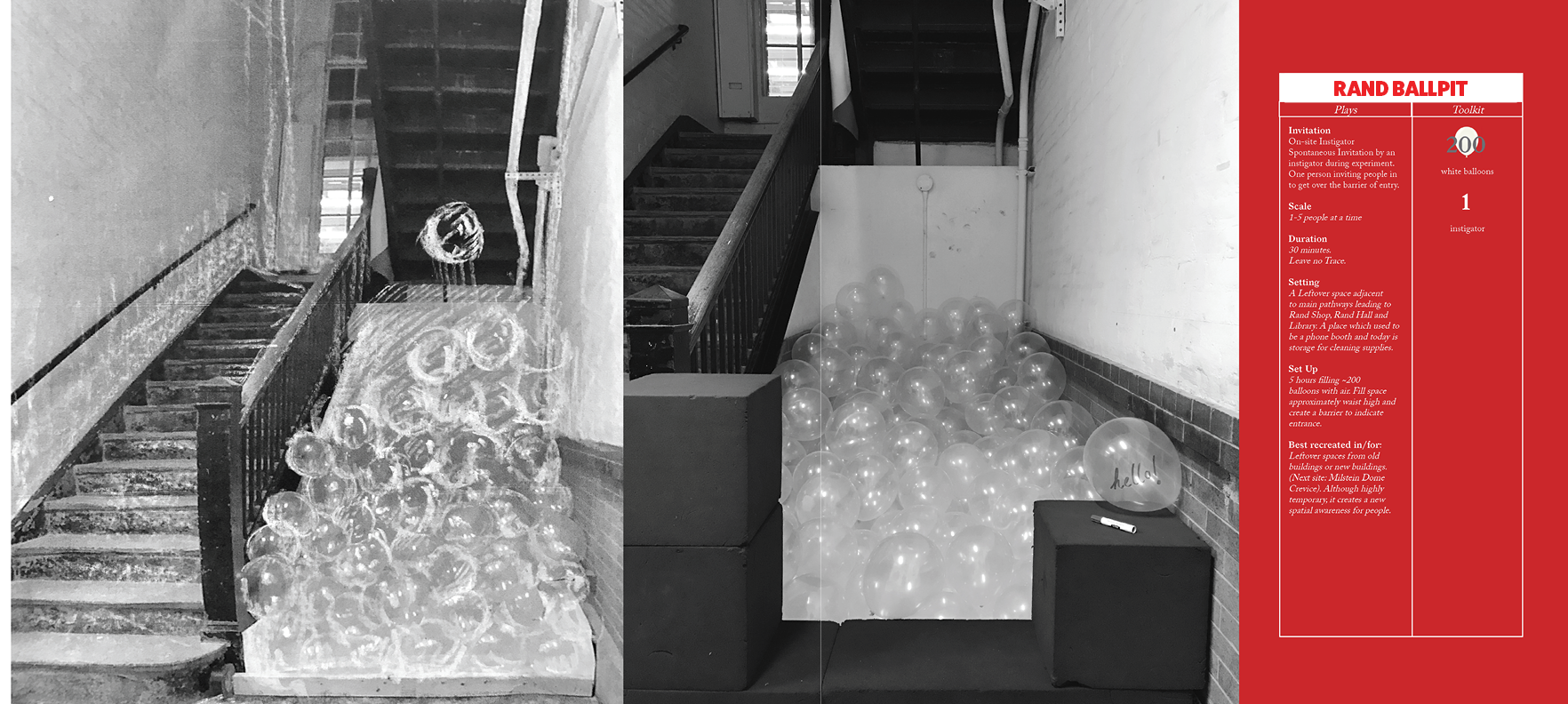
Location: Identified the underside of a staircase located next to our Shop and entrance to the Library. It used to be the location of a phone booth for students to call home, but now sat empty. The area draws foot traffic from those entering the Library and Shop at all hours.
Activation: A Balloon Ballpit that leverages the volume of the underside of the stair.
Materials: 200 white balloons, air, colored lights, foam blocks.
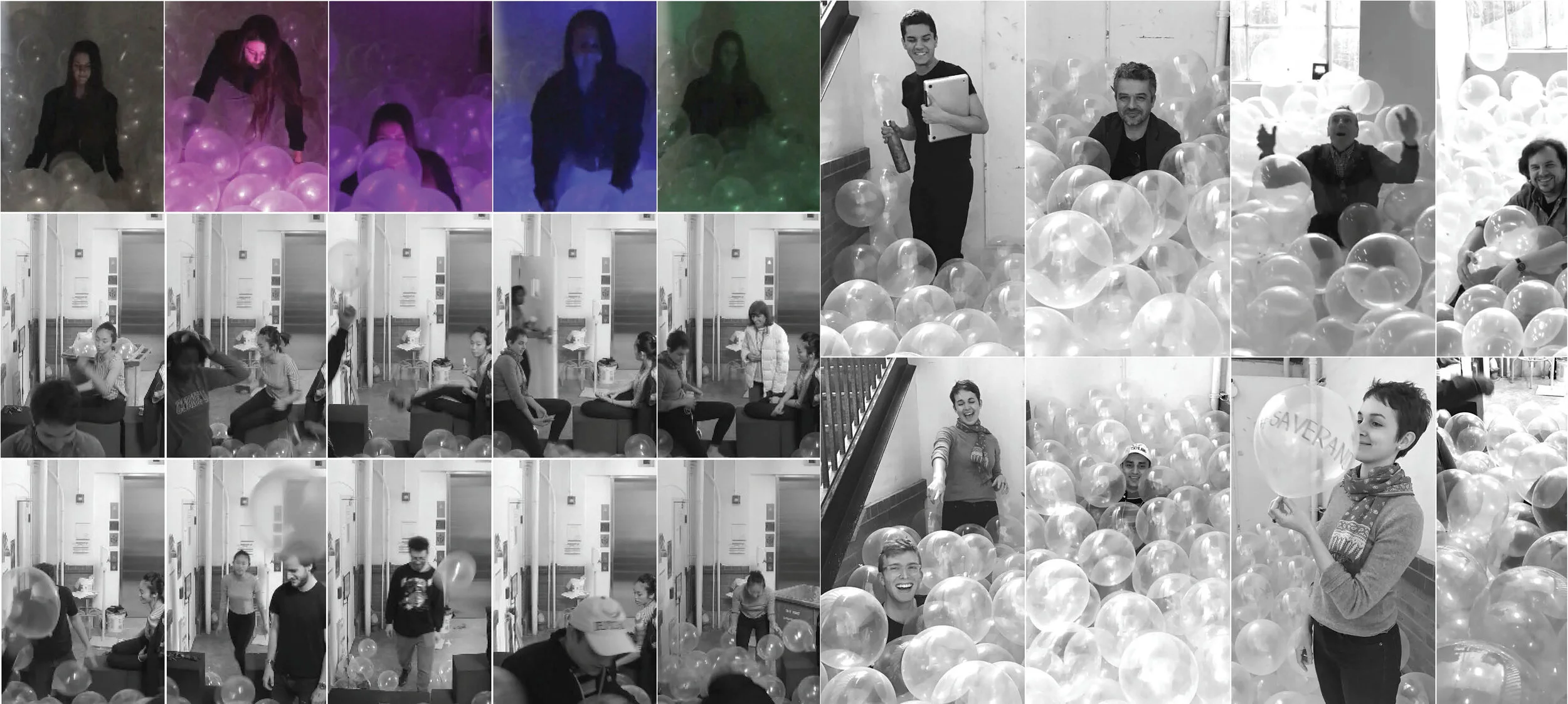
Outcomes: 30 people engaged over one morning.
Learnings: Identify location that is part of circulation and next to popular destinations. Physically and spontaneously invite people to engage and leverage people attracting other people.
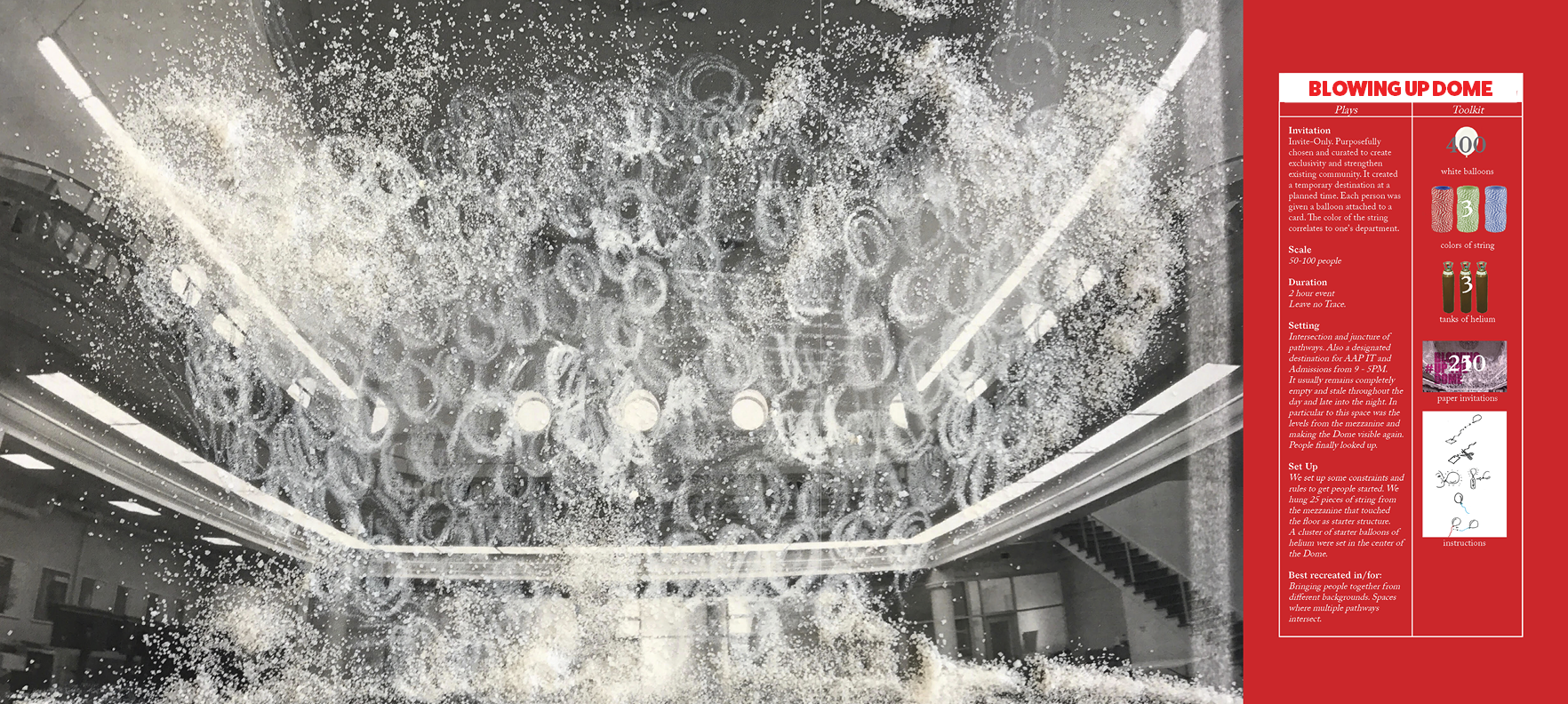
3. Blowing Up the Dome
Challenge: Within the College of Architecture, Art, and Planning, each department is siloed from one another and often stick to their department-owned spaces. "None of the departments interact with one another which is an issue, and the college is also incredibly isolated from the other six colleges." -AAP Student
Opportunity: How might we create connections between the different departments (architecture, art and planning)?
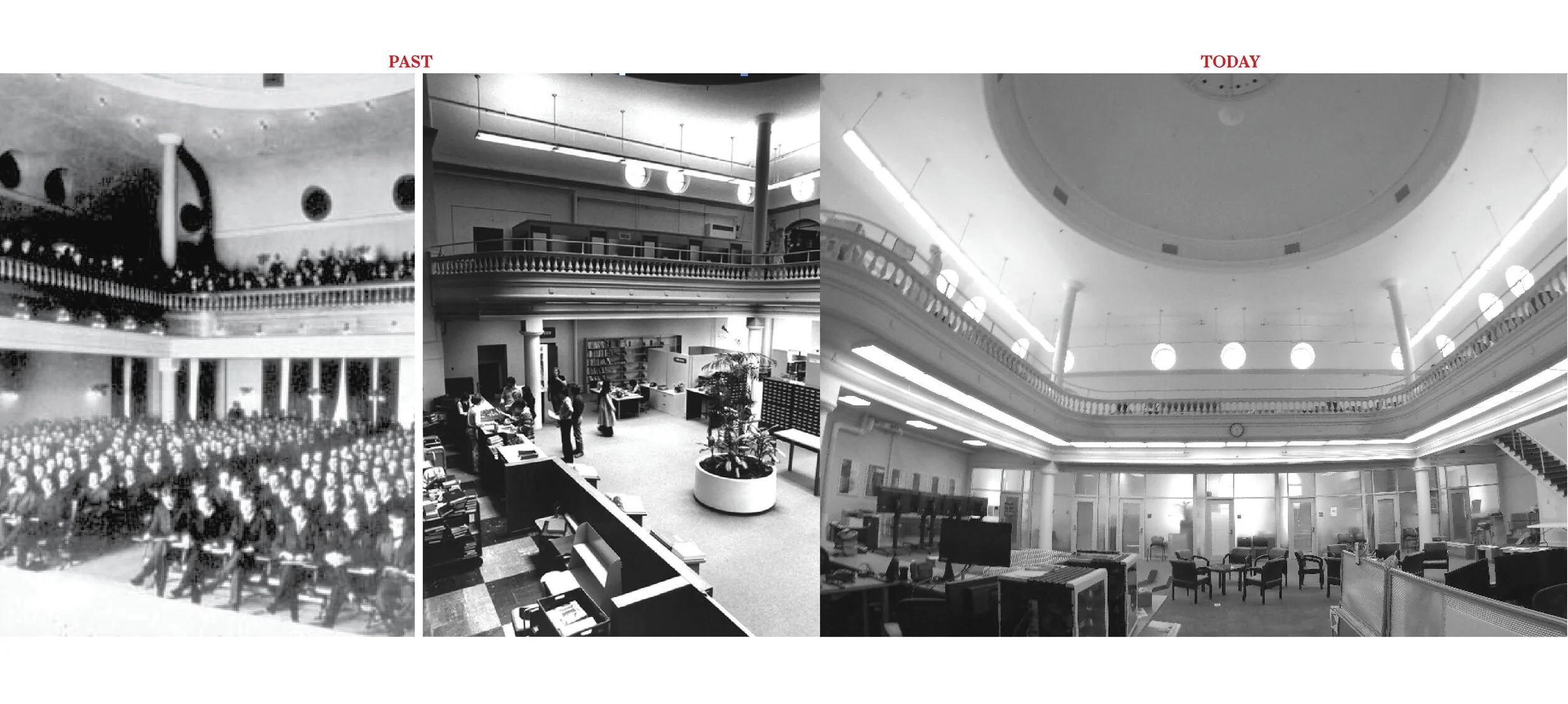
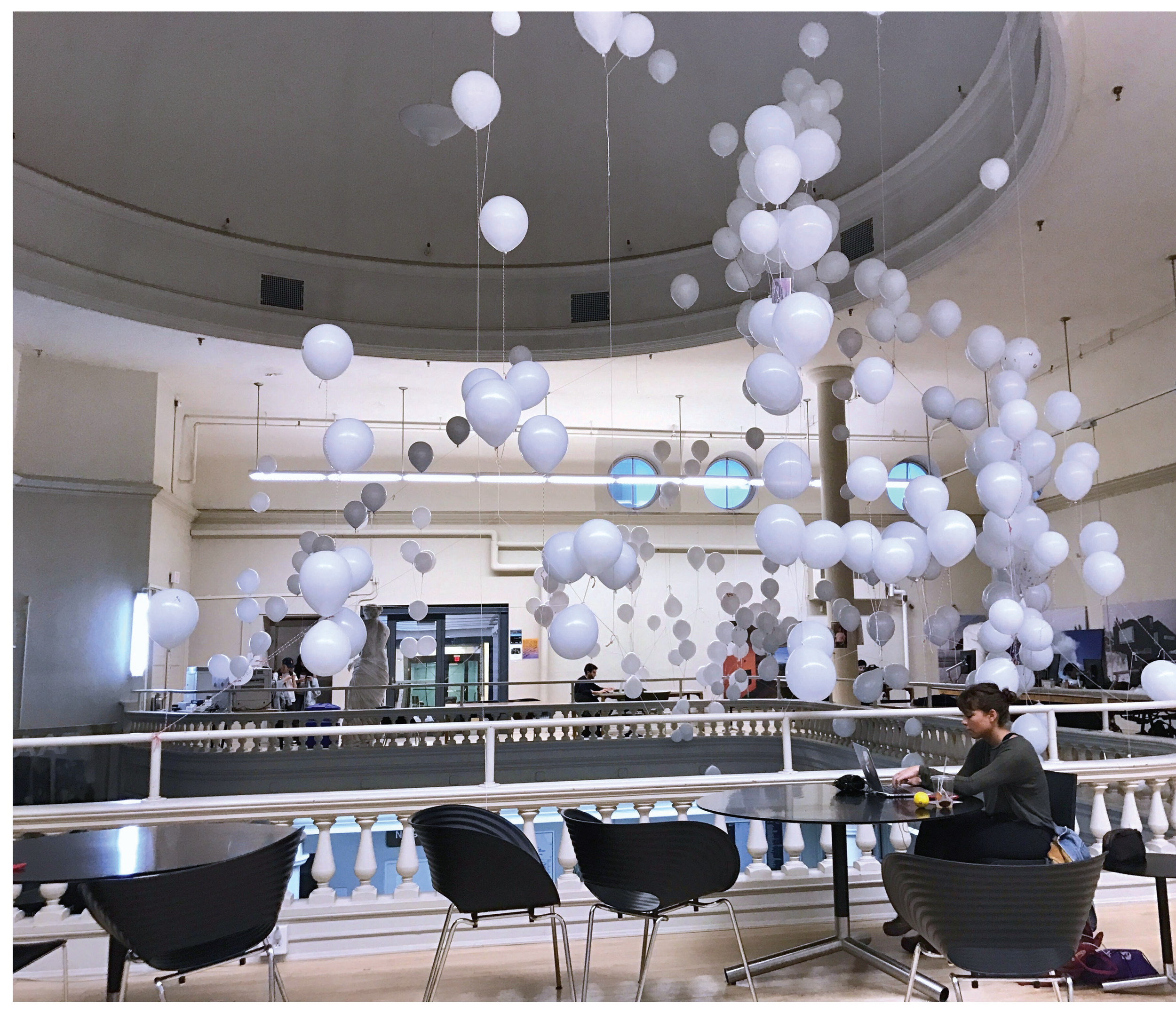
Location: Identified the Sibley Dome and mezzanine, a neutral space that isn’t owned by any particular department and is the current home of the IT desk and previous home to the Library collection. Today it draws people in who need to rent equipment or need IT support from all departments, however it is empty in creating meaningful connections between the different stakeholders that visit.
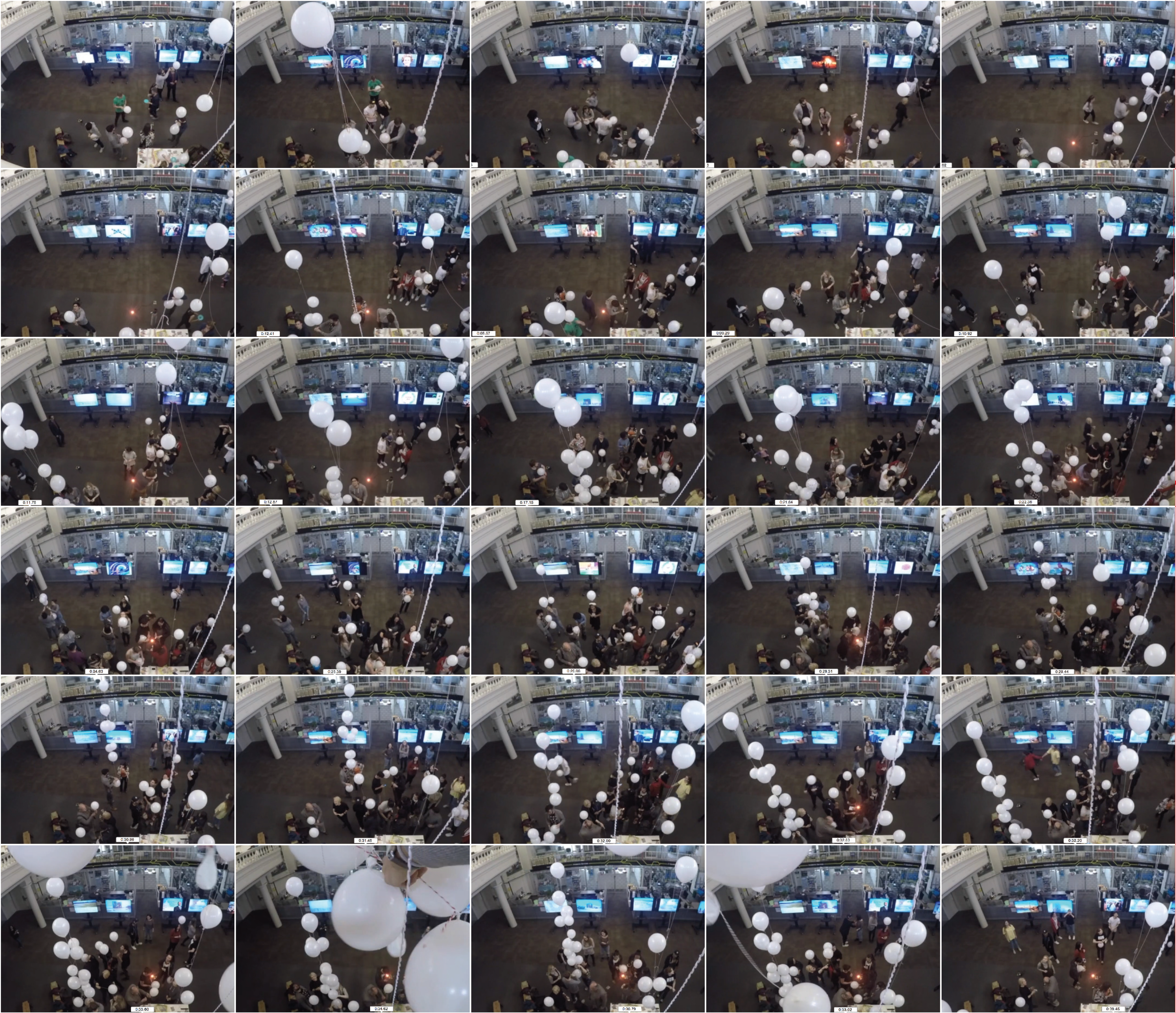
Activation: An interactive installation that invited students and faculty from each department to participate. Prior to the event, paper invitations with a balloon and string were distributed by organizers from architecture, art and planning. Depending on your department, you were handed a balloon with a specific colored string. The rules were that you had to blow up your balloon, and then tie it to a balloon with a different string color (from a different department). Participants worked towards a collective installation, and had spontaneous conversations and connections. People who had shared a space and college for up to 5 years together were able to meet for the first time.
Materials: 400 balloons, 3 colors of string, 3 tanks of helium, 230 paper invitations
Outcomes: 300 people participated over a two hour period through paper invitations with one balloon and piece of string. Conversations between students and faculty from different departments arose as they worked with a specific ruleset to collectively to build an installation.
Learnings: Identify a location that carries a neautral meaning for all communities involved. Design a personalized way to invite people through individual invitations from their friends. Create clear rules on how to play to equalize how different communities participate. Prompt behavior by setting breadcrumbs and starting the initial installation. Make it a surprise by leaving no trace of the installation after event is over.
4. Plaza Twister
Location: Identified Ho Plaza, the intersection between campus and Collegetown right across from the Campus Store and Student Union. Hundreds of students pass through Ho Plaza to attend class or return home.
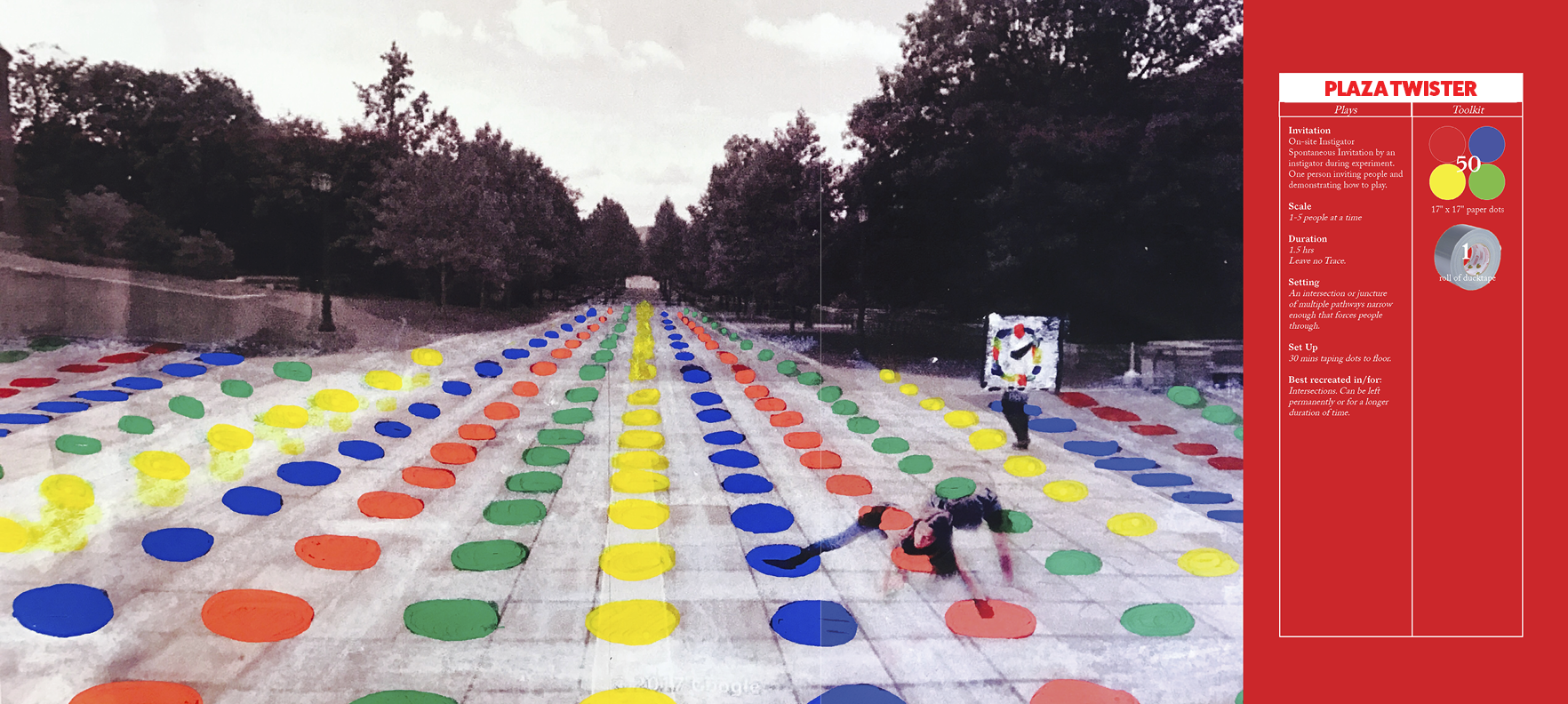
Activation: Plaza Twister, a large scale game of twister that leverages the centerpoint of the Plaza and the size of it’s tiles. Roles: players, sign spinner and reader. Rules:
Materials: 50 17”x17” paper dots, 1 roll of duct tape
Outcomes: 25 people played over a one hour period. From students and faculty and their families.
Learnings: Identify locations with existing heavy traffic that are thoroughfares between popular destinations. Have an instigator on-site to invite people to play. Create specific rules and structure on how to play.
5. Yoga + Moments Wall
Location: Schwarzman Bus Stop and Plaza behind. This space is located right at the entrance to Collegetown across from the revered Collegetown Bagels. Hundreds of students pass by on their way home and many students wait in front of the wall for their bus. The Plaza behind the wall is never utilized.
Activation: Yoga and Moments Wall. To bring awareness to the centrality and emptiness of the plaza, I hosted a yoga class. To provide function to the wall and leverage the time spent by students waiting, I designed an installation that asked passerby and those waiting to reflect on their last year and share a favorite Cornell memories of theirs.
Materials: Yoga mats, paint samples, twine and tape.
Outcomes: 50 participants and memories over the course of a day. A year later, the plaza was transformed to a public space.
Learnings: Identify locations that are underlooked, but are the backdrop to existing foot traffic. Activate through specific temporary programs that are scheduled and unscheduled to create surprise.