GTM Culture Champions Program
Designing systems, rituals, and local experiences that help teams build connection, participation, and shared culture.
Role: Experience Strategy & Design Lead
Scope: Global · 10 sites · 2.4K+ employees · 32 culture champions
Overview
A global program designed to help teams build connection and shared culture through locally driven experiences and rituals.
The GTM organization had no existing rituals and was looking to strengthen cross-team connection across offices. In response, I proposed a site-based Culture Champions model, enabling local teams to design and host experiences tailored to their office and community.
I defined the overall strategy and structure, partnered with teams to launch their first experiences, and developed onboarding systems, playbooks, and tools that enabled culture champions to independently sustain and evolve connection rituals over time.
Impact
Starting from no existing rituals, the program established a distributed model for organizational connection across the GTM organization.
Through pilot activations and playbooks, culture champions were enabled to independently design and sustain their own connection rituals. What began as initial activations evolved into an ongoing, self-sustaining model across sites.
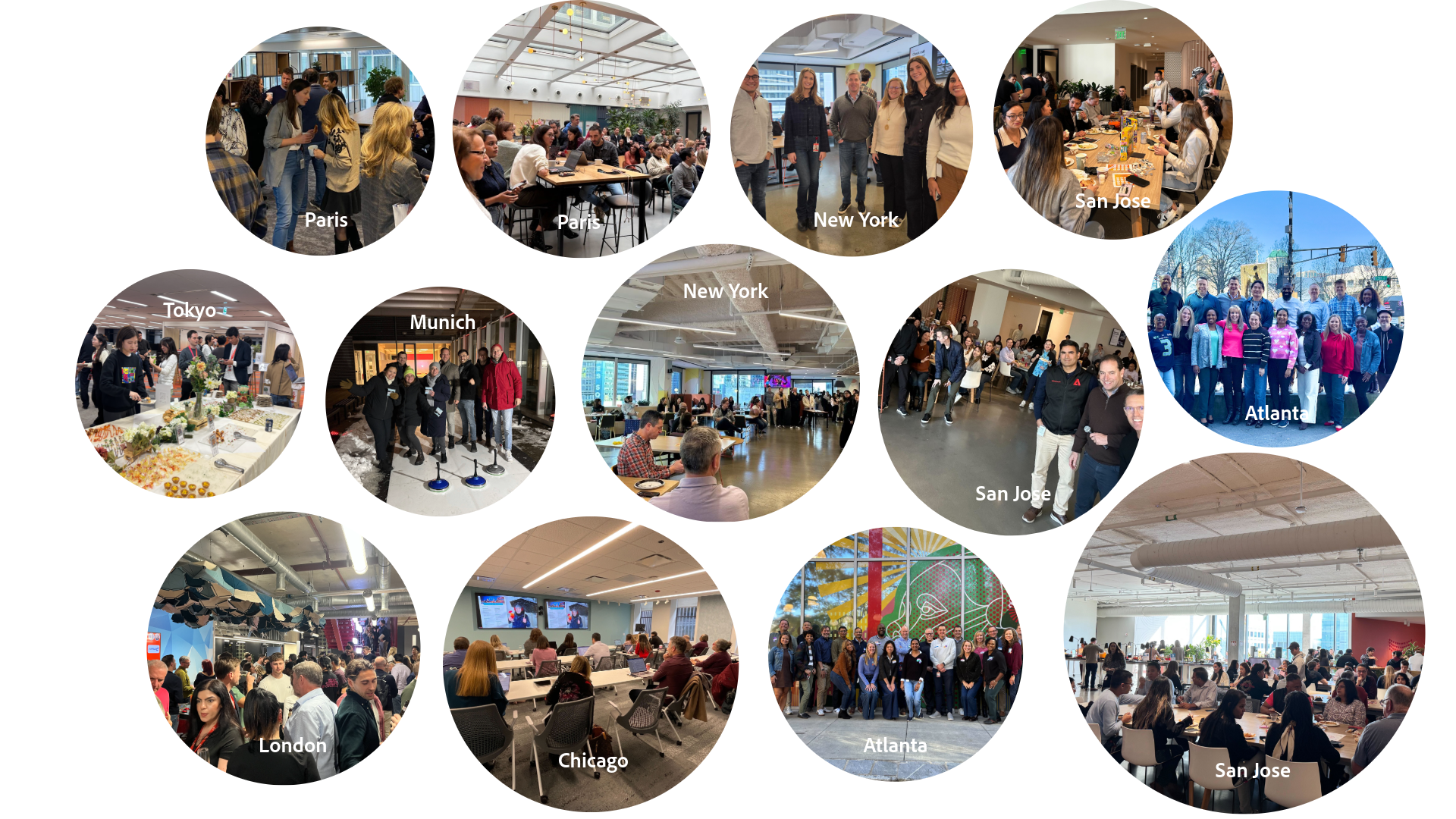
10 global sites (New York, San Jose, Atlanta, Chicago, London, Munich, Paris, Singapore, Tokyo, Sydney)
2.4K+ employees impacted
16+ locally led rituals and experiences
32 culture champions
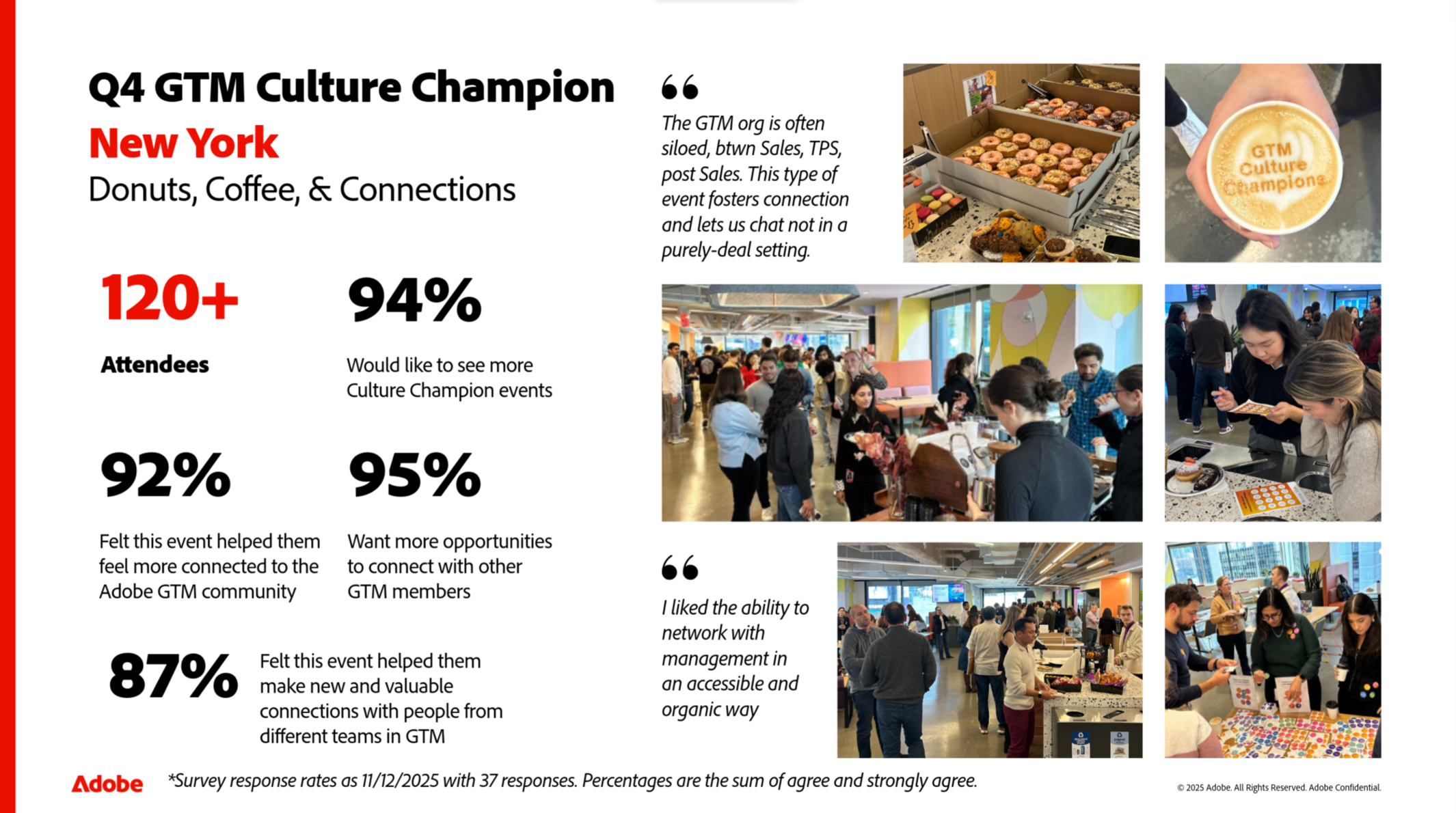
90%+ felt more connected to the GTM organization
Designing and Scaling the Experience
The challenge was not just creating experiences, but defining what makes connection feel meaningful and enabling teams to recreate it themselves.
I translated these principles into simple formats, facilitation guidance, and repeatable systems that culture champions could independently adapt and sustain.
Principles
Designed for participation, not passive attendance
Grounded in local context and team culture
Playful, low-pressure, and easy to join
Built around shared interaction and energy
Simple and repeatable enough for teams to sustain independently
Experience Examples
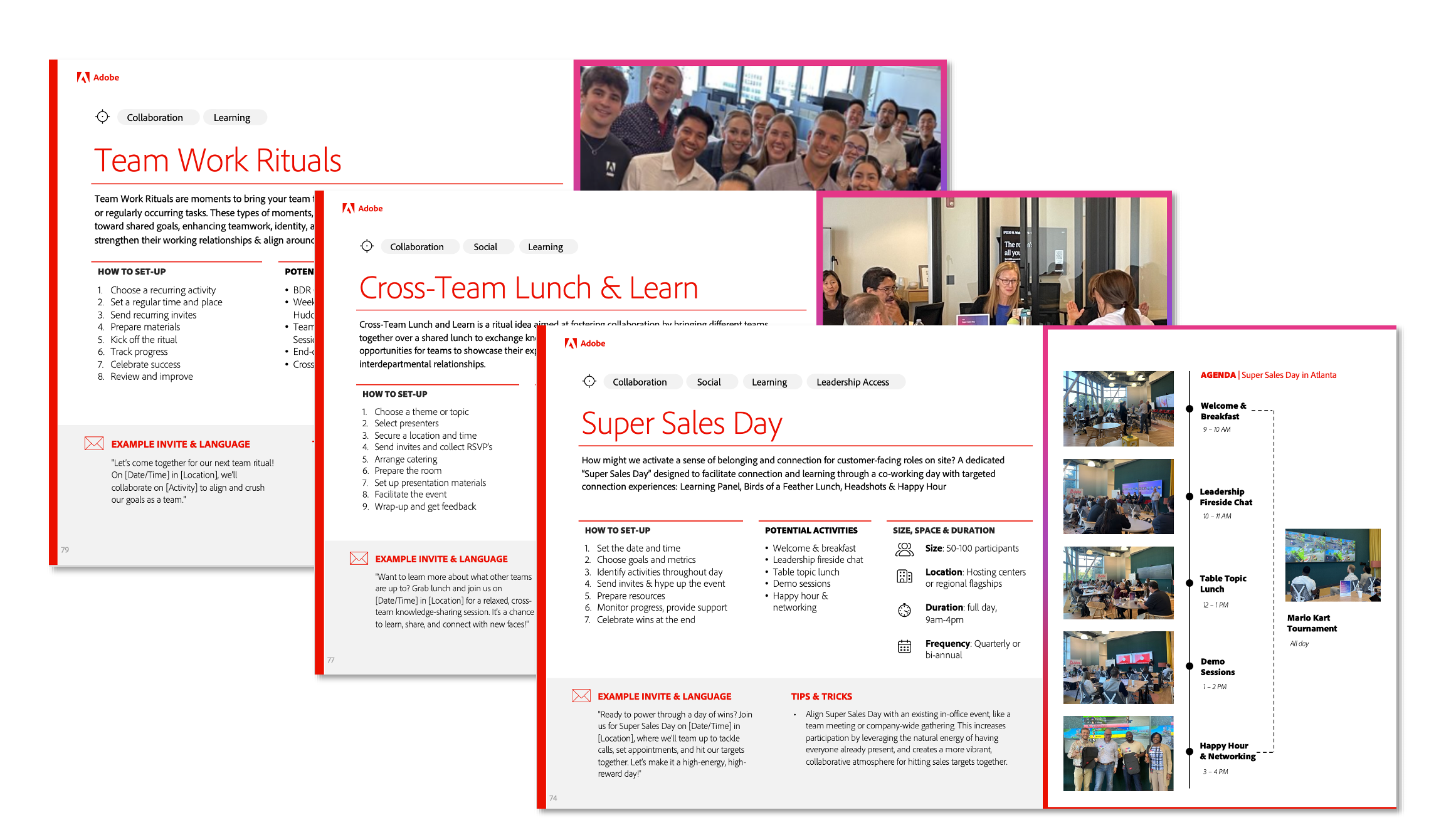
These principles were translated into formats such as cross-team lunches, leadership panels, and play-based experiences like Lego Block Parties, tapping into a broader cultural shift toward analog, nostalgic interaction and creating a more approachable way for teams to connect.
Scaling Through Program Structure and Playbooks
Rather than centrally producing experiences, the goal was to define what “good” looks like and create systems that local teams could adapt and sustain themselves.
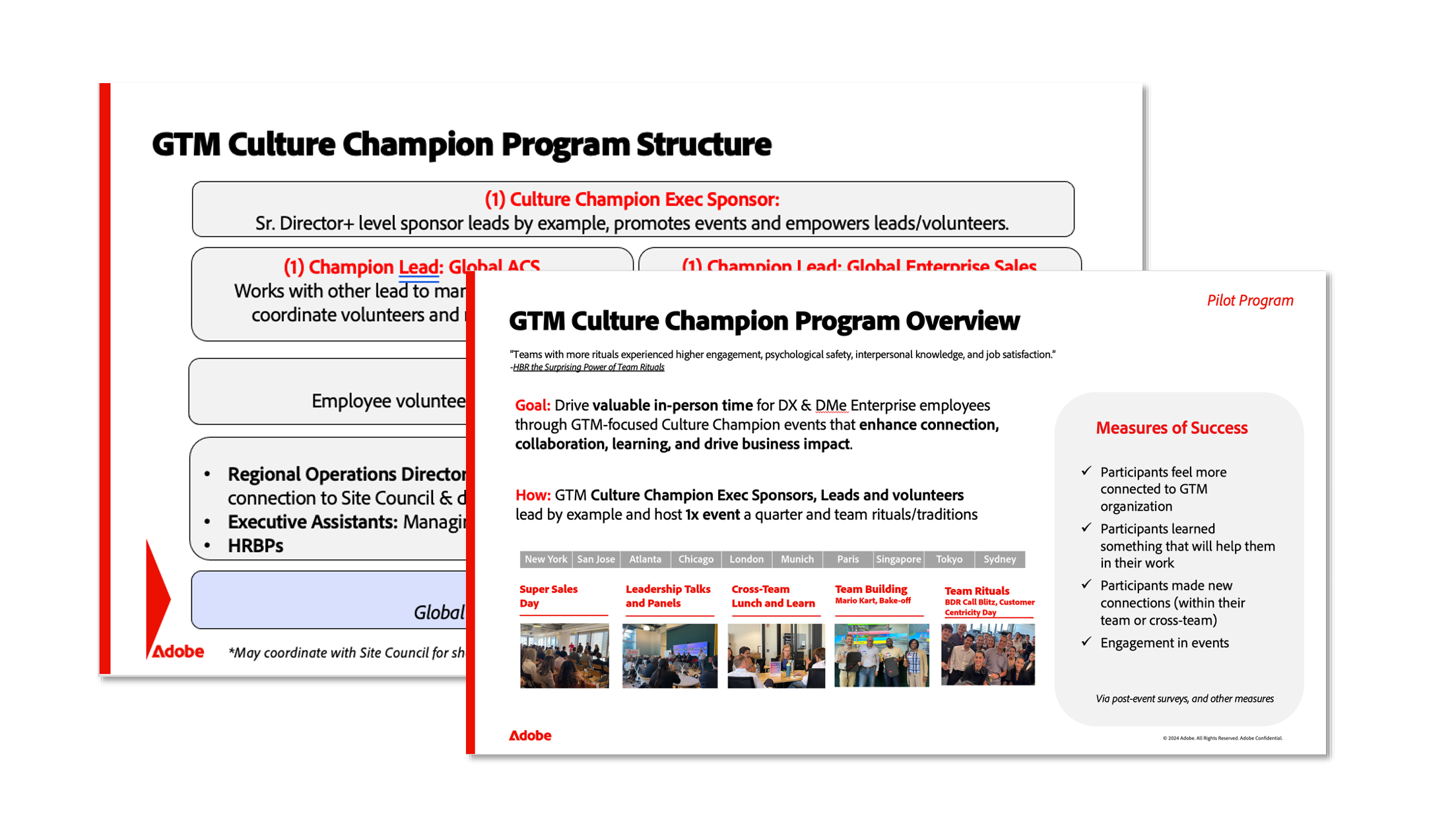
The program combined:
Culture Champion model (local hosts across sites)
Quarterly event framework + ongoing team rituals
Playbooks with connection best practices and formats
“Quick win” templates for low-lift, high-impact moments
Operational tools (budgeting, planning, communications)
Global support and resource hub
to enable locally relevant experiences while maintaining consistency
across sites.
Enabling and Onboarding Teams to Launch
To ensure the program could sustain locally, I partnered with teams to launch their first experience and demonstrate what a great connection experience could feel like in practice.
Through onboarding sessions, kickoff activations, facilitation tools, and lightweight frameworks, culture champions were able to quickly build confidence and continue designing rituals independently over time.
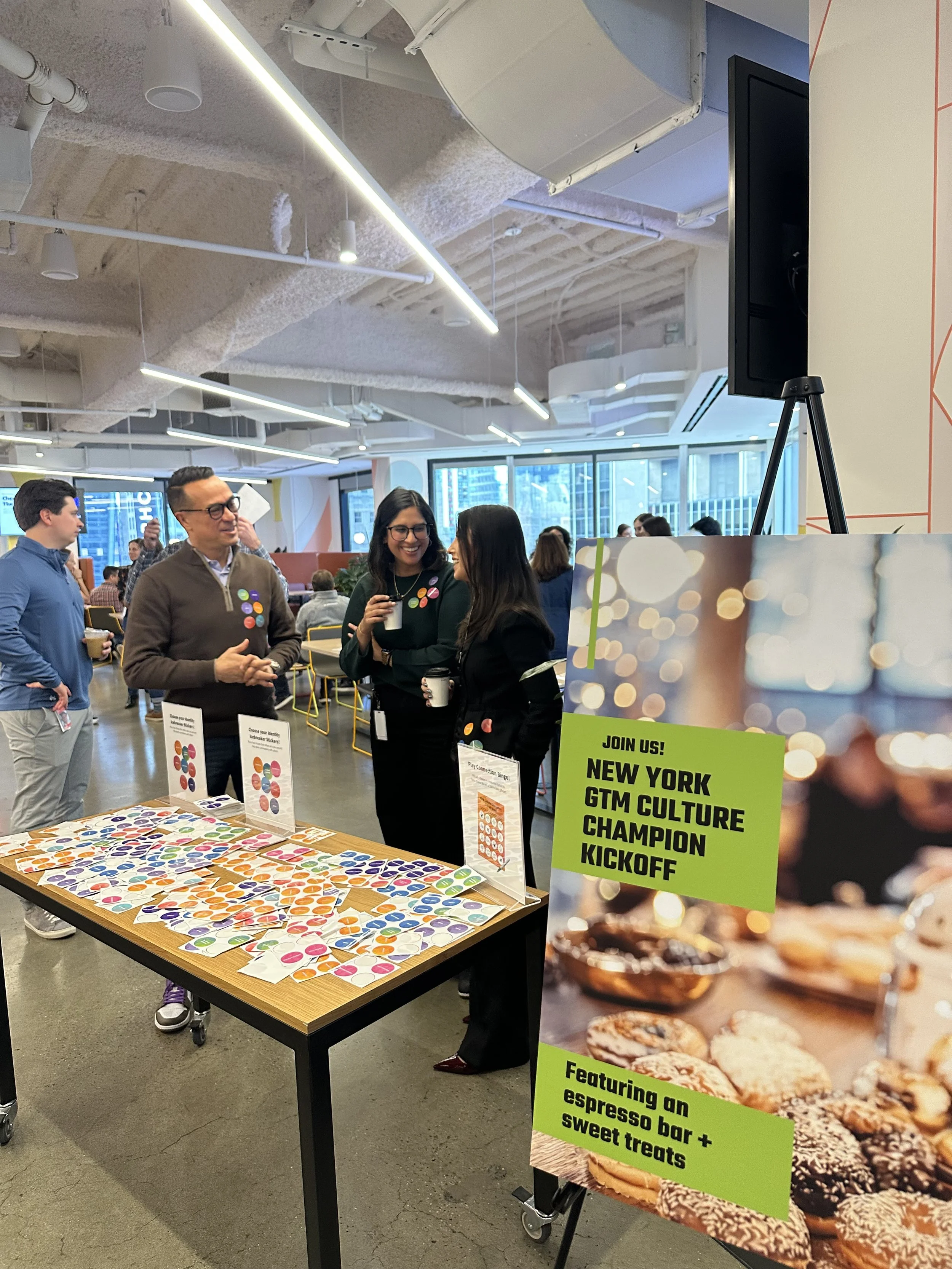
New York Pilot
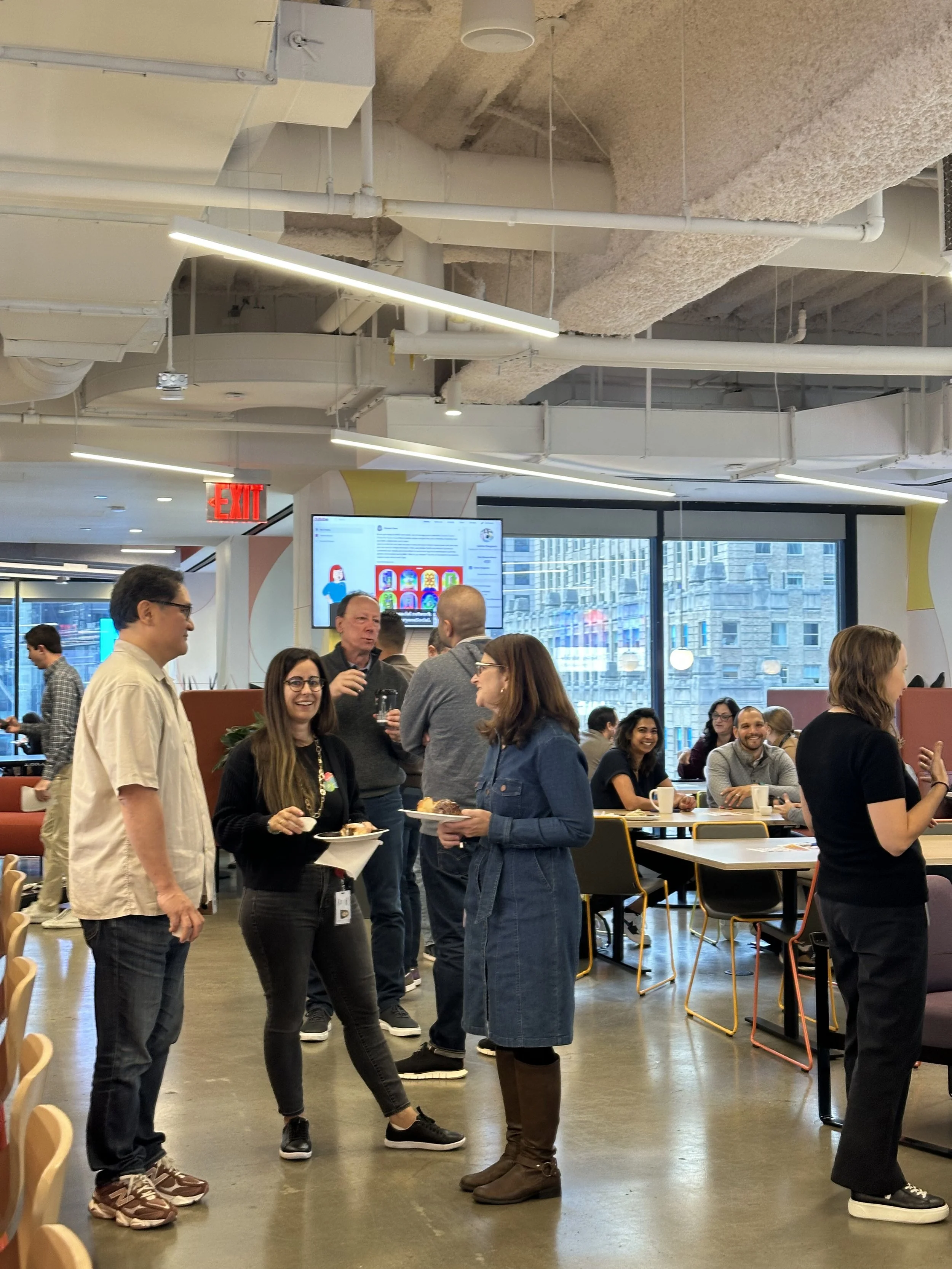
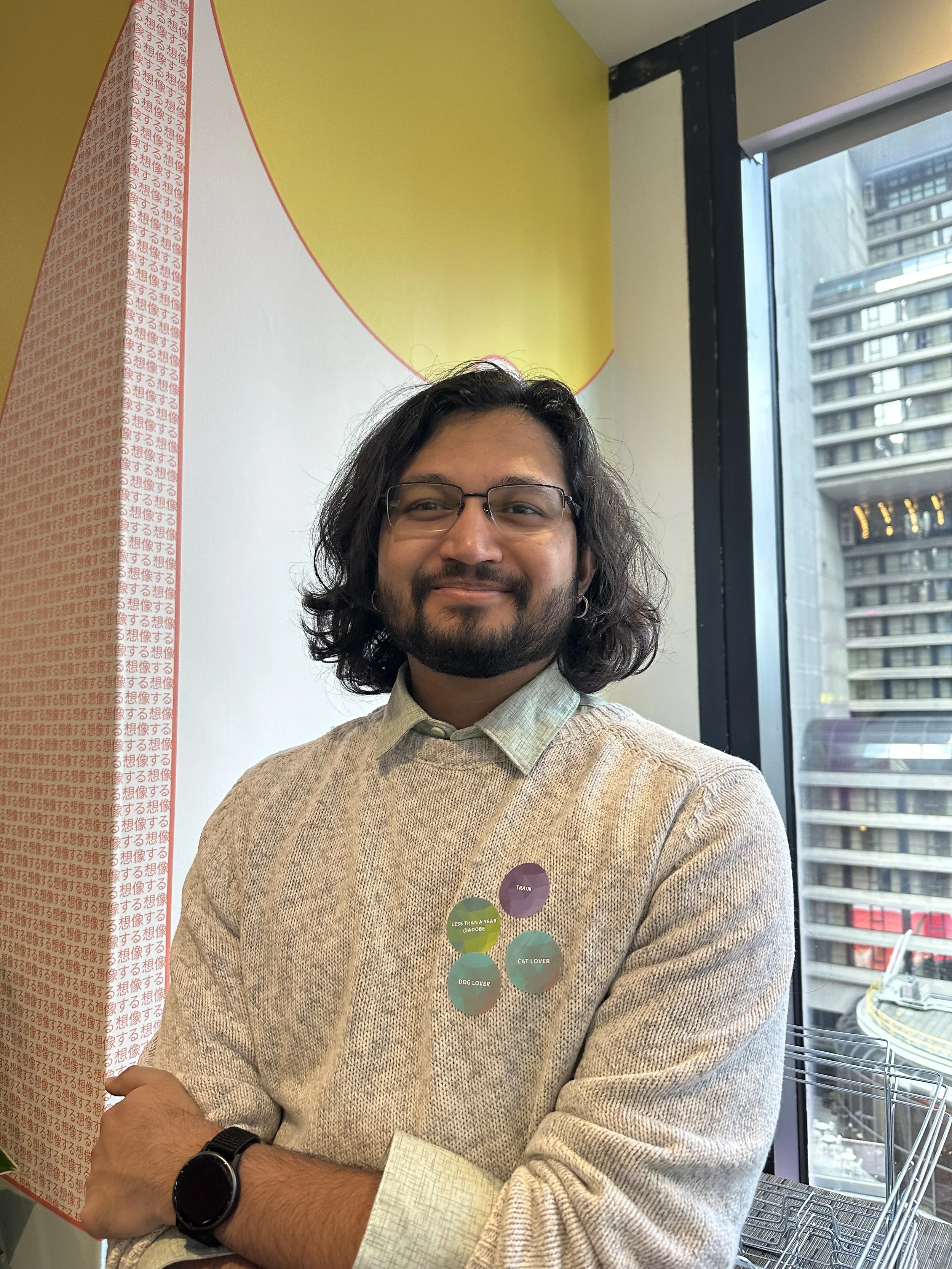
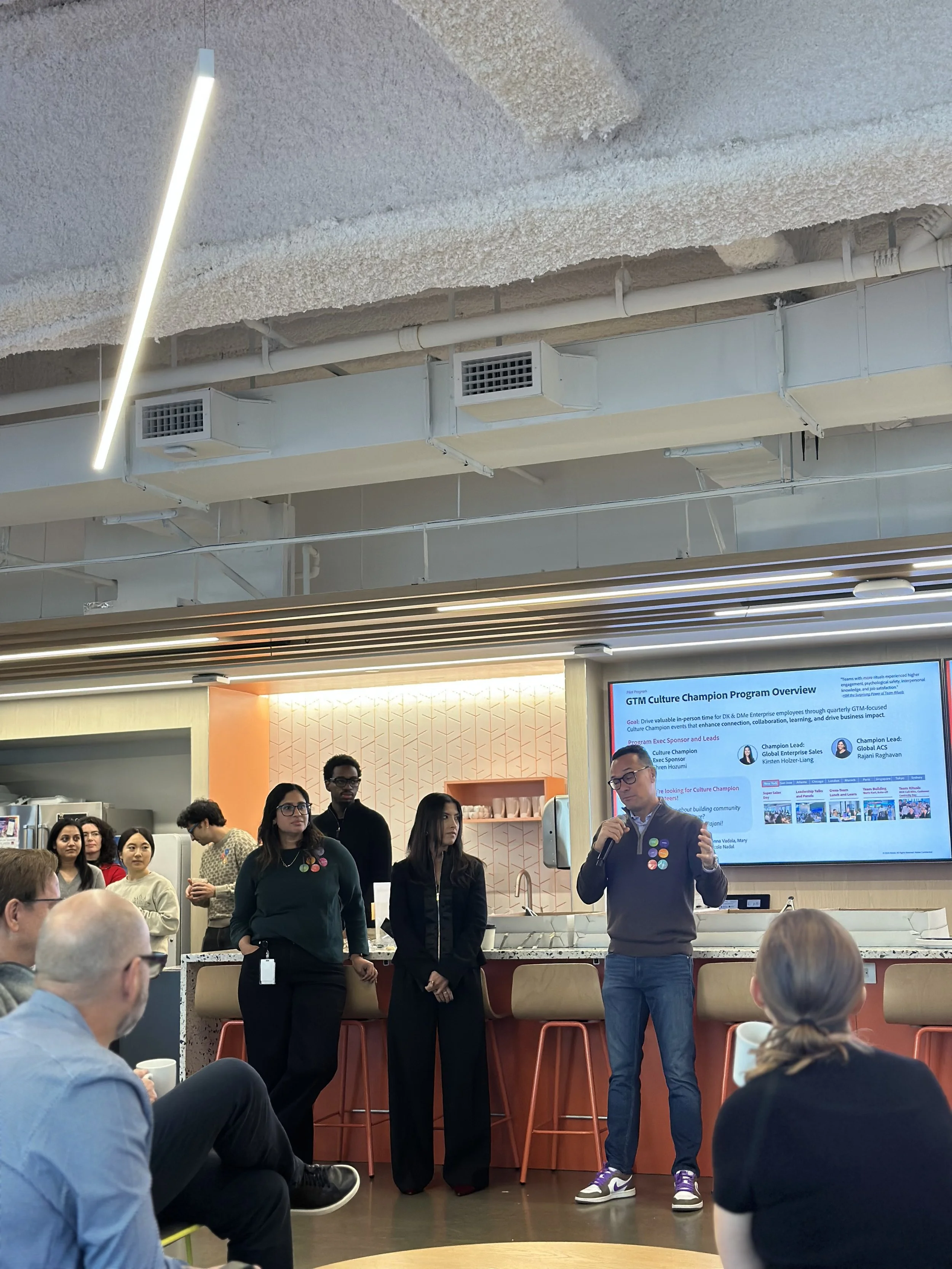
For each site, I partnered with teams to design and launch a kickoff experience. In New York, we started with a simple concept: activating the breakroom as a shared, welcoming space. The experience centered around coffee, donuts, and a short host-led kickoff to bring people together in an informal, low-pressure setting.
Small design interventions played an important role:
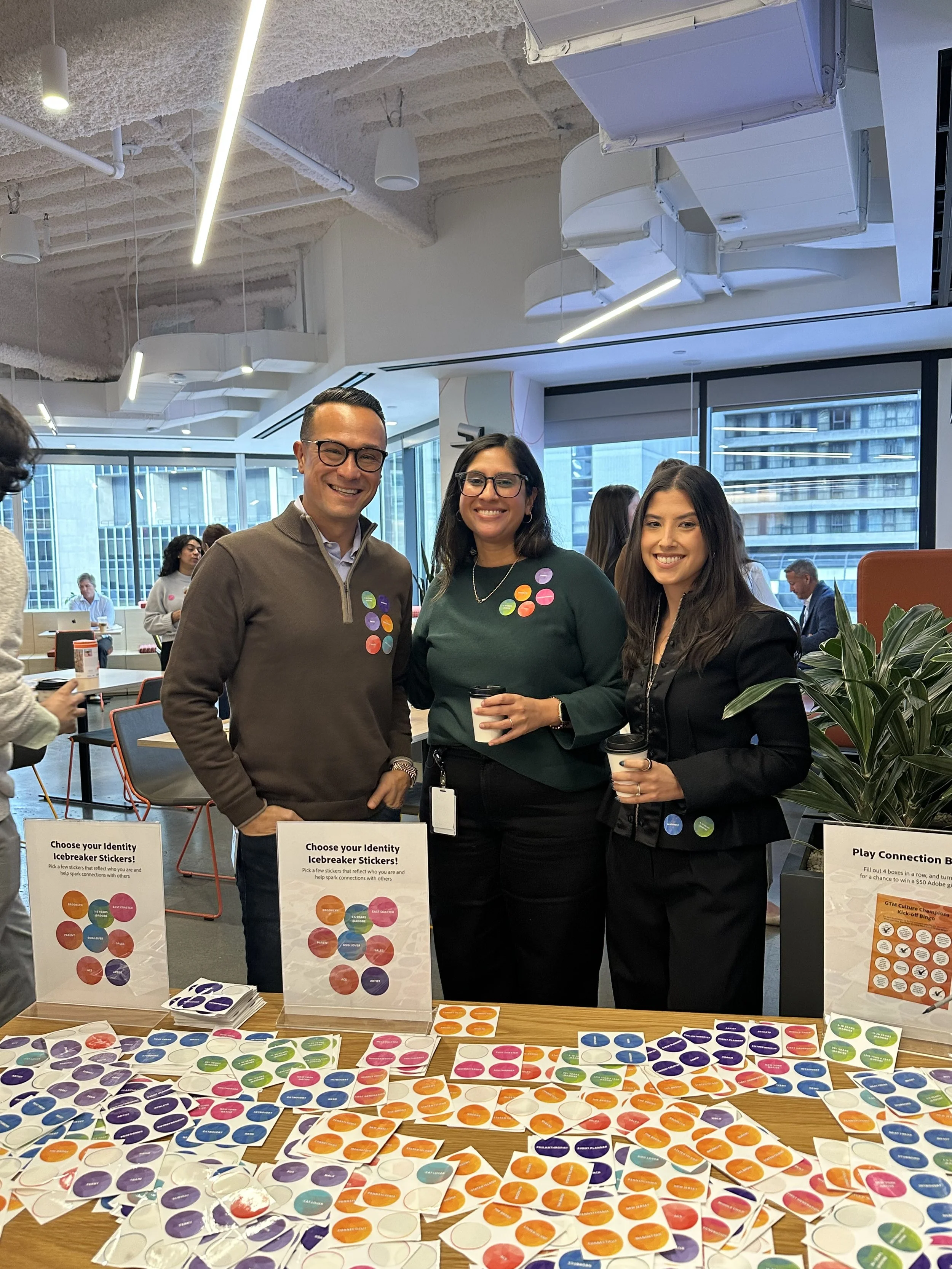
Identity icebreaker stickers (inspired by SYPartners) helped people quickly share something about themselves and made it easier to start conversations
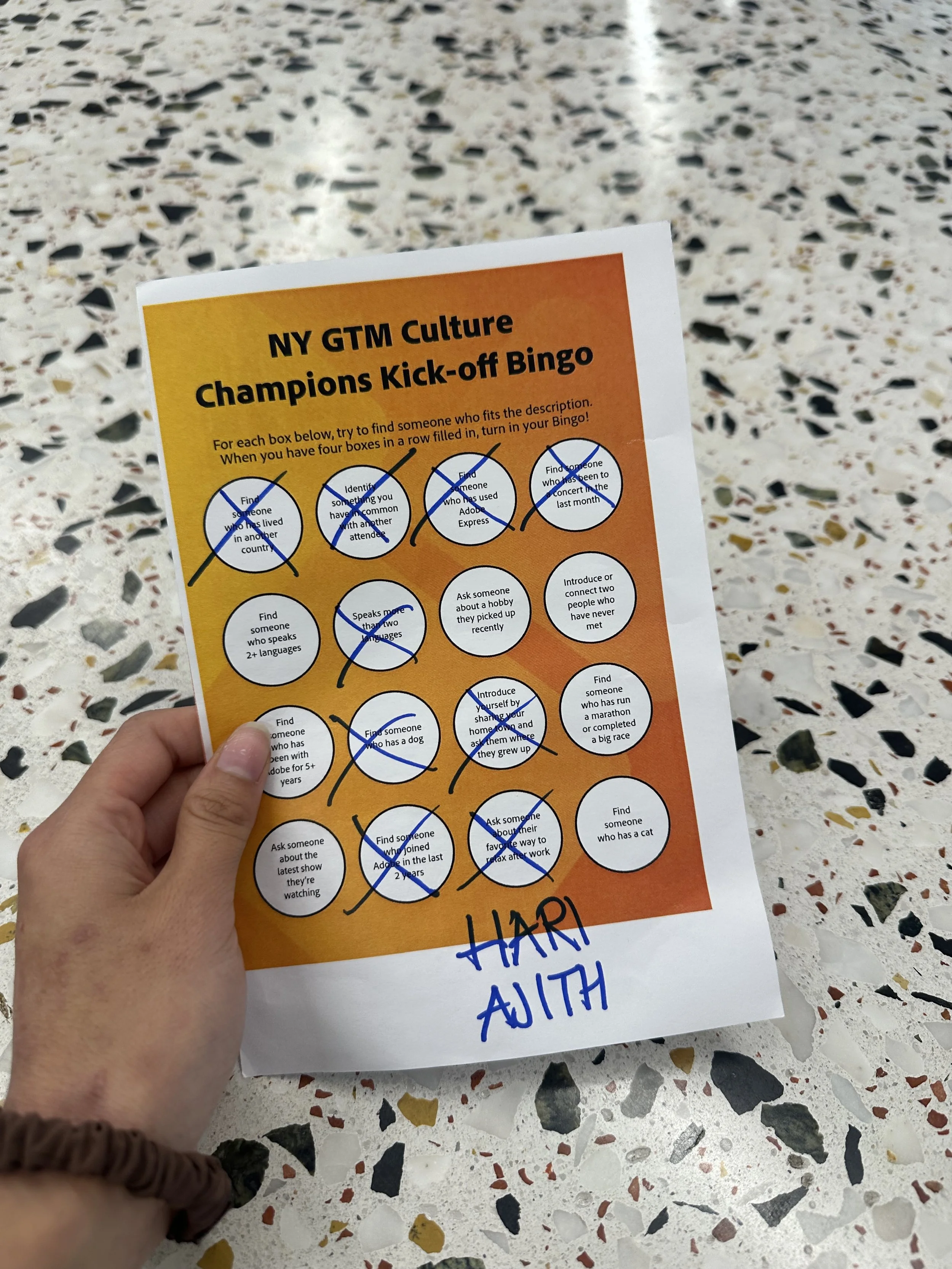
Connection Bingo encouraged cross-team interaction in a light, low-pressure way
Culture Champion hosts kicked off the event, establishing purpose and tone
By keeping the format simple but intentional, teams were able to see how small design choices shape behavior and connection, giving them a clear model to build on for future experiences. This reinforced that a great experience doesn’t need to be complex, but it does need to be intentional.
What participants said
“The GTM org is often siloed, especially between Sales, TPS, post Sales. This type of event fosters connection and lets us chat not in a purely-deal setting.”
“[The NYC Breakfast Social] is awesome! It can be intimidating to introduce myself to new people, but the stickers and bingo make it easy”
“Seeing the leadership team from all parts is great and talking in a more open and collaborative environment feels inclusive”
Designing Connection Through Enablement
Meaningful organizational connection doesn’t come from centralized events alone, but from experiences that feel locally relevant, participatory, and easy for teams to sustain.
The most effective approach was not designing everything centrally, but defining what “good” looks like and enabling others to create it themselves.
This work reinforced that scaling connection is less about producing more experiences, and more about building the systems, confidence, and shared rituals that allow connection to happen organically over time.